
American spongeplant
Limnobium spongia
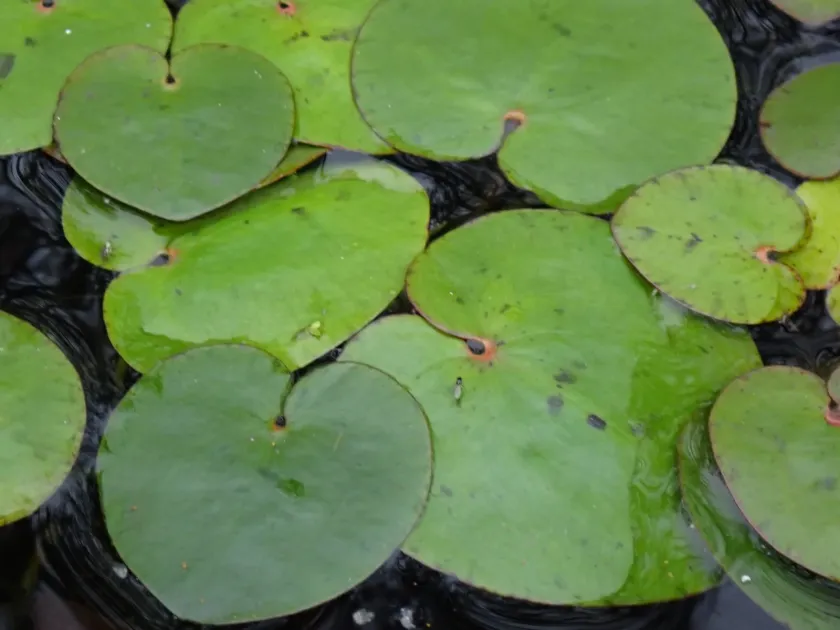
Description
Sowing dates
Limnobium spongia, commonly known as the American spongeplant, is a perennial aquatic plant belonging to the Hydrocharitaceae family. It typically grows as a floating mat on the surface of freshwater bodies, utilizing long stolons for expansion.
Propagation is primarily vegetative in commercial settings. By encouraging the development of daughter rosettes along the stolons, producers can rapidly establish new plants. Each healthy rosette serves as a propagation unit.
Planting should be initiated in the spring when water temperatures stabilize above 20°C. In controlled environments, placing rosettes in nutrient-rich water with ample space for expansion is the standard method for initial stock establishment.
While seed propagation is possible, it is rarely used in large-scale agriculture due to the faster and more reliable nature of vegetative division. Seeds require moist, high-light conditions to germinate, which can be challenging to maintain in open-water systems.
Regular thinning of the planting area is necessary to prevent overcrowding, which can lead to reduced plant size and susceptibility to pathogens due to poor air circulation between the leaves.
Growing requirements
The American spongeplant thrives in stagnant or slow-moving water bodies. It requires significant light exposure to maintain healthy growth and high photosynthetic rates, making it unsuitable for deeply shaded areas.
Temperature is a critical factor for successful production; the optimal range is between 20°C and 28°C. Prolonged exposure to temperatures below 15°C will cause the floating rosettes to decline, and frost will kill the emergent vegetative parts.
Water quality parameters such as pH should be maintained between 6.0 and 7.5. The plant is sensitive to high salinity, so freshwater sources are essential for optimal development and metabolic function.
The substrate or water column must be rich in nitrogen and phosphorus. As an efficient bio-accumulator, the plant draws most of its nutrients directly through its submerged roots, which makes it an ideal candidate for treating nutrient-dense wastewater.
Adequate water circulation is required to prevent the accumulation of gases and pathogens, though the movement should not be forceful enough to flip the rosettes or break the stolons.
Yield
The yield of Limnobium spongia is measured by its rapid biomass production. Under optimal nutrient conditions, the plant can effectively act as a biological sponge, doubling its surface coverage in a matter of weeks during the peak growing season.
This species is highly valued in environmental management for phytoremediation. Its ability to absorb excess fertilizers and certain pollutants makes it a practical tool for improving water quality in man-made reservoirs and treatment ponds.
Harvesting is typically performed mechanically. Using nets or specialized conveyor-based harvesters allows for the removal of dense biomass, which can then be repurposed as organic mulch or compost material.
Yield stability depends on maintaining an active, juvenile growth phase. Older patches that become too dense tend to produce smaller leaves and are more susceptible to decay, making frequent thinning essential for maximum throughput.
In well-managed systems, the plant serves a dual purpose: providing surface cover for fish farming while acting as an effective natural filtration system that reduces the need for expensive chemical treatment.
Main diseases and pests
Bacterial and fungal infections are the primary threats, often occurring when air circulation is poor or the plant is overcrowded. Symptoms include soft, necrotic spots on the leaves and a general decline in plant vigor.
Pests such as aphids can quickly colonize the succulent leaf tissues. These insects weaken the plants and can serve as vectors for secondary viral infections, necessitating vigilant monitoring during the warmer months.
Nutrient deficiencies, particularly iron chlorosis, are common in intensive systems. This is manifested by the yellowing of leaf tissues while veins remain green, indicating a need for specific chelated micronutrient supplementation.
Competition from filamentous algae is a constant issue. These algae can entangle the root systems of the spongeplant, restricting its movement and access to water-borne nutrients, thereby suppressing overall growth.
- Leaf necrosis caused by stagnant conditions.
- Aphid infestations damaging foliage.
- Iron deficiency leading to chlorosis.
- Invasive filamentous algae overgrowth.