
Hydrilla
Hydrilla verticillata (L. f.) Royle
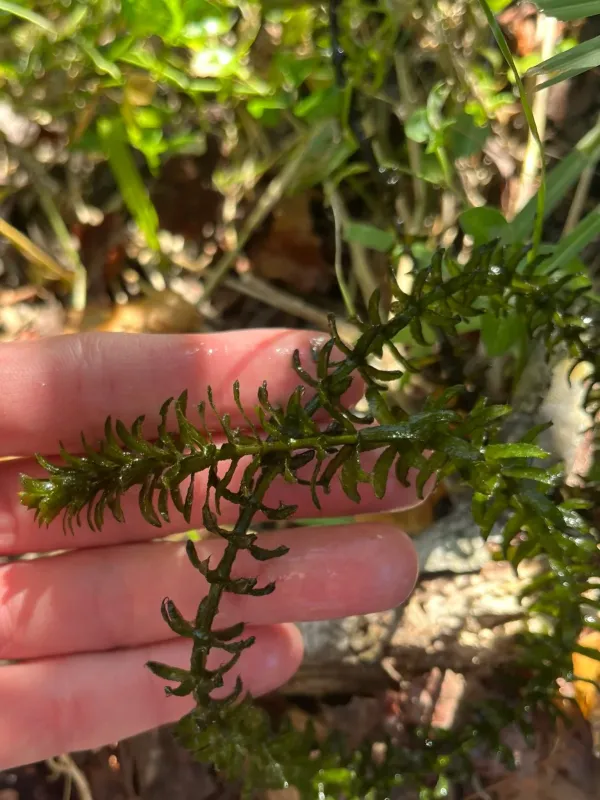
Description
Growing requirements
Hydrilla (Hydrilla verticillata) is a perennial submerged aquatic plant belonging to the Hydrocharitaceae family. It is a highly resilient species known for its rapid growth rate and ability to adapt to diverse freshwater environments ranging from lakes to canals.
Originally native to parts of Asia, Europe, and Australia, it has become widely distributed across the globe. Due to its aggressive growth, it is often categorized as an invasive species in regions where it outcompetes native aquatic vegetation for nutrients and light.
The plant features slender stems with whorls of small leaves, usually occurring in groups of four to eight. It is uniquely capable of performing photosynthesis under extremely low light conditions, allowing it to colonize deeper waters where other plants cannot survive.
Environmental requirements are minimal, as Hydrilla thrives in various water temperatures and nutrient levels. It propagates primarily through vegetative fragments, turions, and subterranean tubers, making it one of the most successful aquatic plants in existence.
Economically, it is frequently used in research and aquarium settings due to its efficiency as an oxygenator. Its capacity to absorb excess dissolved nitrogen and phosphorus helps maintain water clarity and balance in closed aquatic systems.
Main diseases and pests
In its native range, the plant is controlled by specialized herbivores, including various species of moth larvae and insects that feed on the foliage. These biological agents play a crucial role in preventing the excessive proliferation of the weed in the wild.
Pathogenic threats include fungal infections that manifest when the plant's metabolic health is compromised by poor water quality. Such infections can lead to stem tissue necrosis, which is often exacerbated by sudden shifts in the water's chemical composition.
The accumulation of epiphytic algae on the leaves is a common stressor that blocks sunlight and interferes with gas exchange. This often forces the plant into a period of stagnation and increases the susceptibility to secondary bacterial rot.
Control strategies for large infestations typically involve mechanical harvesting, though this must be done carefully to prevent the dispersal of vegetative fragments. In managed environments, maintaining a stable CO2 balance is the best defense against disease.
Effective management also requires monitoring for invasive pests that may migrate from neighboring water bodies. Integrated aquatic management programs focus on minimizing plant damage while ensuring the overall biodiversity of the local ecosystem remains intact.