

Reference · Crops
Grossulariaceae
The Grossulariaceae family consists of perennial deciduous shrubs that hold significant economic importance in global berry production. This botanical family is primarily known for its two main genera, Ribes, which includes both currants and gooseberries, valued for their nutritional profiles and commercial versatility.
100
items
What the section contains
 Pretty currant
Ribes pulchellum
Pretty currant
Ribes pulchellum
 Prickly currant
Ribes lacustre
Prickly currant
Ribes lacustre
 Prickly gooseberry
Ribes cynosbati
Prickly gooseberry
Ribes cynosbati
 Purple currant
Ribes purpurascens
Purple currant
Ribes purpurascens
 Redcurrant
Ribes erythrocarpum
Redcurrant
Ribes erythrocarpum
 Ribes ambiguum
Ribes ambiguum
Ribes ambiguum
 Ribes binominatum
Ribes binominatum
Ribes binominatum
 Ribes dicanthum
Ribes dicanthum
Ribes dicanthum
 Ribes dikuscha
Ribes dikuscha
Ribes dikuscha
 Ribes gayanum
Ribes grossularioides
Ribes grossularioides
Ribes holosericeus
Ribes holosericeus
Ribes gayanum
Ribes gayanum
Ribes grossularioides
Ribes grossularioides
Ribes holosericeus
Ribes holosericeus
 Ribes inerme
Ribes kochii
Ribes kochii
Ribes inerme
Ribes inerme
Ribes kochii
Ribes kochii
 Ribes laxiflorum
Ribes laxiflorum
Ribes laxiflorum
 Ribes leptanthum
Ribes luridum
Ribes luridum
Ribes leptanthum
Ribes leptanthum
Ribes luridum
Ribes luridum
 Ribes petiolare
Ribes petiolare
Ribes petiolare
 Ribes procumbens
Ribes procumbens
Ribes procumbens
 Ribes stenocarpum
Ribes urceolatum
Ribes urceolatum
Ribes stenocarpum
Ribes stenocarpum
Ribes urceolatum
Ribes urceolatum
 Ribes vilmorinii
Ribes vilmorinii
Ribes vilmorinii
 Rock currant
Ribes petraeum
Rock currant
Ribes petraeum
 Roundleaf gooseberry
Ribes rotundifolium
Sakhalin currant
Ribes sachalinensis
Roundleaf gooseberry
Ribes rotundifolium
Sakhalin currant
Ribes sachalinensis
 Sierra gooseberry
Ribes roezlii
Sierra gooseberry
Ribes roezlii
 Spiny currant
Ribes aciculare
Spiny currant
Ribes aciculare
 Squaw currant
Ribes inebrians
Squaw currant
Ribes inebrians
 Sticky currant
Ribes glutinosum
Sticky currant
Ribes glutinosum
 Sticky currant
Ribes viscosissimum
Sticky currant
Ribes viscosissimum
 Stink currant
Ribes bracteosum
Succirubrum currant
Ribes succirubrum
Stink currant
Ribes bracteosum
Succirubrum currant
Ribes succirubrum
 Swamp red currant
Ribes triste
Takare currant
Ribes takare
Swamp red currant
Ribes triste
Takare currant
Ribes takare
 Tulare currant
Ribes tularense
Tulare currant
Ribes tularense
 Ussuri currant
Ribes ussuriensis
Ussuri currant
Ribes ussuriensis
 Velvet currant
Ribes velutinum
Warszewicz currant
Ribes warszewiczii
Velvet currant
Ribes velutinum
Warszewicz currant
Ribes warszewiczii
 Wax currant
Ribes cereum
Wax currant
Ribes cereum
 Wolf's currant
Ribes wolfii
Wolf's currant
Ribes wolfii
Marketplace
Products in this section · 12

Биоорганическое нано удобрение "НАГРО" / "NAGRO"
LLC NPO "BIOPLAN"
Fertilizers
43
25
1 offer
37.63 €за л
Buy


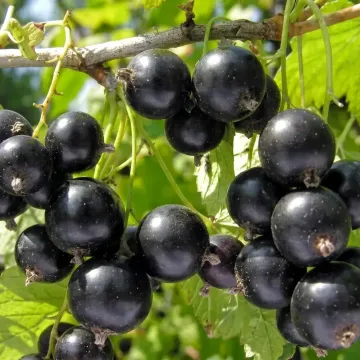
Grossulariaceae
Originating in the temperate regions of the Northern Hemisphere, these plants have a wide natural range extending across Europe, Asia, and North America. They thrive in climates that provide sufficient moisture and a period of winter dormancy, which is essential for proper physiological development and consistent annual flowering.
Morphologically, these shrubs are characterized by simple, alternate, and often palmately lobed leaves. Depending on the species, the stems may be either smooth or armed with sharp spines. Their fruit is a distinct type of berry, typically globose in shape, containing numerous small seeds, and varying in color from translucent green to deep black or red.
Cultivation practices require careful site selection, prioritizing deep, loamy, and well-draining soils with a slightly acidic pH. Effective water management is crucial, as the root systems are relatively shallow and susceptible to moisture stress. Pruning is a fundamental part of the maintenance cycle, aimed at managing the bush architecture and removing wood older than three years to promote fruit production.
Agronomic challenges for Grossulariaceae species include susceptibility to pathogens such as powdery mildew, leaf spot, and rust. Furthermore, pests like the currant borer and various aphid species can cause significant damage if not managed correctly. Sustainable pest control strategies, including crop rotation and the use of resistant cultivars, remain the primary defense in modern commercial orchards.
- Nutritional richness, particularly in vitamin C and antioxidants.
- Widespread use in food processing (jams, jellies, and beverages).
- High adaptability to various temperate climate zones.