
Zollernia paraensis
Zollernia paraensis
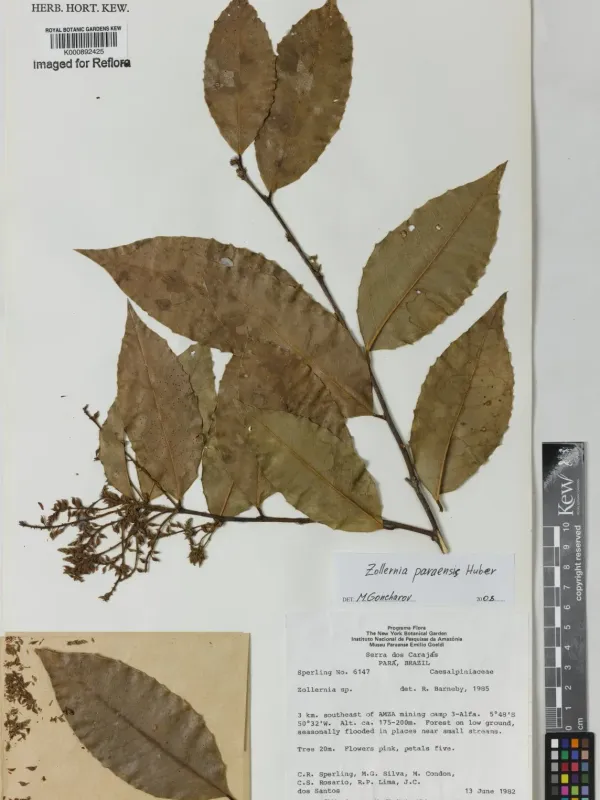
Description
Growing requirements
Zollernia paraensis is a botanical species belonging to the Fabaceae family. This tree is native to the tropical rainforests of Brazil, predominantly distributed within the Amazon River basin.
The culture requires humid tropical conditions with consistent rainfall throughout the year. It has specific soil requirements, preferring deep, well-drained substrates with a neutral or slightly acidic pH balance.
In its natural habitat, the tree develops under the dense canopy of the rainforest, which makes it sensitive to direct sunlight during its early growth stages. Optimal temperatures for its development range from +24°C to +30°C.
Botanically, the species is a medium to large-sized tree capable of reaching significant heights in natural settings. Its leaves are alternate and leathery, with flowers typical of the Caesalpinioideae subfamily.
The primary economic value of the species lies in its unique timber, which is characterized by high density, extreme hardness, and natural resistance to rot, making it highly prized in furniture and cabinetry production.
Main diseases and pests
Like many other tropical tree species, Zollernia is susceptible to specific fungal pathogens that thrive in conditions of high environmental humidity.
The main threat to the culture includes various wood-boring insects and xylophagous pests that can compromise the trunk's integrity and reduce the quality of the commercial timber.
During the early seedling stage, the plants are vulnerable to various tropical insect herbivores that feed intensively on the young, tender foliage.
A critical factor affecting the survival of the species is anthropogenic pressure, specifically deforestation and changes to the soil's hydrological regime in its native region.
Comprehensive protection of stands is complicated by the specific environment and lack of extensive breeding data, leading to a strong focus on preserving natural ecosystems.