
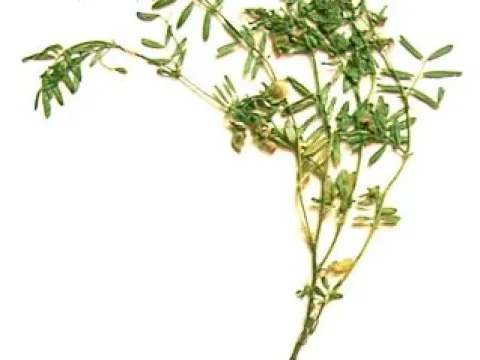
Lentil
Lens Mill.
Lentils Lens culinaris, members of the Fabaceae family, are cool-season annual legumes known for their nutritional value and adaptability. Planting begins in early spring as soon as the soil is workable, typically between 5°C and 6°C.
What the section contains


Lentil
Timely sowing is crucial to allow the crop to establish a deep root system before the onset of summer heat. Early establishment also maximizes the efficiency of soil moisture utilization during the vegetative growth phase.
Standard agronomic practice involves drilling seeds in rows with 15 cm spacing, although narrow-row patterns are common to ensure canopy closure and suppress weed competition.
Seeding rates depend on the specific variety and thousand-kernel weight, usually ranging from 1.5 to 3 million viable seeds per hectare to ensure optimal plant density.
Post-sowing rolling is highly recommended to improve soil-to-seed contact, which accelerates germination and ensures uniformity, especially in regions with limited spring precipitation.
Lentils thrive in sunny conditions and are moderately drought-tolerant, but they require consistent moisture during the critical stages of flowering and pod formation.
The ideal soil is a well-drained loam or sandy loam with a neutral pH. Soils with poor drainage or high clay content are detrimental to lentil growth as they increase the risk of root rot.
The crop is highly sensitive to soil acidity, which interferes with nodulation and nitrogen fixation. Liming may be necessary for fields with low pH levels to optimize plant growth.
As a nitrogen-fixing legume, lentils improve soil fertility, making them an excellent candidate for rotation with cereals like wheat or barley.
Fertilization should be guided by soil testing; typically, applications of phosphorus and potassium are prioritized, as excessive nitrogen can promote excessive vine growth rather than seed production.
Yield potential for lentils varies significantly based on management practices, averaging between 1.5 and 2.5 tonnes per hectare under optimal environmental conditions.
Harvest timing is the most critical factor in protecting yield, as over-mature pods become brittle, leading to severe shattering losses if the harvest is delayed.
Global market demand for plant-based proteins has solidified the economic position of lentils as a high-value cash crop in many agricultural regions.
Modern breeding programs are focused on developing varieties with uniform maturity and improved resistance to biotic and abiotic stresses, facilitating more efficient mechanized harvesting.
Beyond human consumption, lentil by-products and damaged seed lots are highly valued as concentrated protein sources in livestock rations.
The primary threats to lentil crops include fungal diseases like ascochyta blight, anthracnose, and root rot, particularly in seasons with high rainfall or prolonged humidity.
Common pests include the lentil weevil, aphids, and pea leaf weevils, which can cause significant damage to foliage and developing seeds if not managed early.
Integrated Pest Management (IPM) strategies, including long-term crop rotation and the use of certified disease-free seeds, are essential for maintaining field health.
Chemical intervention through seed treatment and timely application of fungicides is often necessary in high-risk areas to prevent widespread outbreaks of fungal pathogens.
- Maintain a 4-year rotation cycle to reduce soil-borne disease load.
- Monitor fields frequently for pest pressure during the flowering stage.
- Use resistant cultivars as the first line of defense.
The harvesting window for lentils occurs when the plants turn yellow-brown, and the seeds become hard, usually reaching a moisture content of 15% to 18%.
Farmers often choose between swathing (cutting and windrowing) or direct harvesting, depending on the uniformity of the crop and the availability of machinery.
Direct harvesting is gaining popularity with improved headers, though it requires precise combine settings to prevent mechanical seed damage and minimize shattering losses.
Post-harvest handling is critical; harvested lentils should be cleaned and dried to a storage moisture level of 13% or lower to prevent spoilage and quality degradation.
Properly managed, lentils can be stored for extended periods, allowing growers to wait for favorable market conditions before selling their harvest.