
Gliricidia sepium
Gliricidia sepium (Jacq.) Kunth ex Walp.
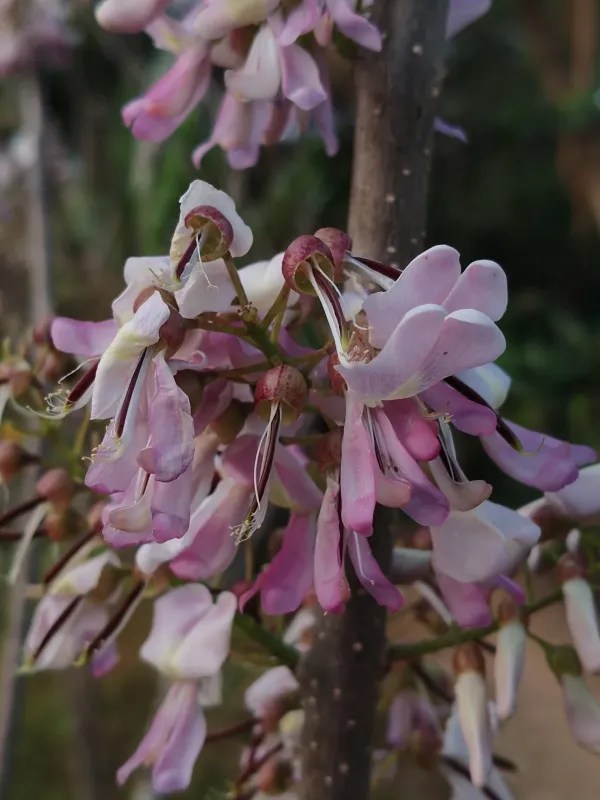
Description
Sowing dates
Gliricidia sepium is propagated primarily through seeds or stem cuttings, making it highly adaptable for various agroforestry systems. When using seeds, they should be sown in nurseries or directly into the field at the start of the rainy season to ensure optimal moisture for germination.
Stem cuttings are a preferred method for establishing living fences, as they allow for rapid establishment and growth. Hardwood cuttings, 50 to 150 centimeters long, are planted immediately after the onset of the wet season to ensure a high survival rate.
As a legume, Gliricidia benefits from inoculation with specific Rhizobium bacteria when planted in new areas. This symbiosis enhances nitrogen fixation, which significantly accelerates the growth of seedlings during their initial development phase.
Planting density depends on the intended purpose; for living fences, a spacing of 20 to 30 centimeters is standard. When grown for biomass production, a wider spacing is recommended to encourage lateral branching and increase overall yield.
The tree's rapid growth rate allows it to effectively outcompete weeds during the first year of establishment. Keeping the area free of competing vegetation until the canopy closes is essential for ensuring the longevity and health of the young trees.
Growing requirements
This tropical tree thrives in warm climates, preferring temperatures between 20 and 30 degrees Celsius. While it demonstrates significant drought tolerance, it requires an annual rainfall between 900 and 1500 millimeters for optimal biomass production.
Gliricidia is a light-demanding species and does not perform well in shaded conditions. It prefers well-drained loamy soils but shows remarkable adaptability to a wide range of conditions, including acidic, alkaline, and nutrient-poor soils that are typical in tropical environments.
Waterlogging and poor drainage are detrimental to Gliricidia, often leading to root rot. Therefore, it is important to select sites that provide good aeration. The tree is highly valued for its ability to restore fertility to degraded and eroded lands.
It performs well at elevations ranging from sea level up to 1500 meters. Its genetic plasticity allows it to be used effectively in various ecological restoration projects and sustainable farming systems across the tropical belt.
Maintenance includes systematic pruning, which stimulates dense foliage growth and keeps the tree manageable. Regular pruning also encourages the production of new sprouts, which are the most nutritious parts of the plant for animal consumption.
Yield
When grown for fodder, Gliricidia can yield between 5 and 10 tons of dry matter per hectare annually. This productivity is highly dependent on the frequency of harvesting and the availability of soil nutrients, although the tree is efficient in capturing nitrogen.
By fixing atmospheric nitrogen, the tree enriches the soil, often providing the equivalent of 50–150 kg of nitrogen fertilizer per hectare. This natural fertilization boosts the growth of intercropped species and improves overall farm productivity.
The foliage is highly nutritious, with protein content reaching 20–25%, making it an excellent supplement for livestock. Consistent yields of green biomass can be maintained for up to two decades from a single established plantation.
Biomass left as mulch on the field decomposes rapidly, recycling essential nutrients into the soil. This practice improves soil structure and water retention, providing significant benefits in regions prone to seasonal moisture stress.
For fuel production, the tree can yield 20–30 cubic meters of wood per hectare during a 5–7 year rotation cycle. Gliricidia wood is dense and provides high heat, making it an excellent source of sustainable firewood for local communities.
Main diseases and pests
While Gliricidia is generally resistant to many pests, it can be susceptible to fungal diseases like powdery mildew or leaf spot in high-humidity conditions. These infections typically affect young shoots and foliage during the peak of the rainy season.
Root rot caused by Phytophthora or Fusarium species is a risk on poorly drained soils. Preventing this requires careful site selection and ensuring that root systems are not mechanically damaged during routine field operations.
Occasional herbivory by lepidopteran larvae may occur, but these attacks rarely reach economic threshold levels. The tree's strong regenerative capacity allows it to quickly recover from such minor damage without the need for chemical intervention.
Seed storage can be challenged by bruchid beetles, which can significantly reduce seed viability. It is advisable to store seeds in cool, dry conditions and consider appropriate treatments to protect them from infestation during storage.
Maintaining plantation hygiene, such as removing diseased branches and ensuring adequate airflow, is the most effective way to manage potential threats. Gliricidia is largely considered a low-input, sustainable agricultural crop.
Harvesting
Harvesting green biomass for fodder is done through manual or mechanical pruning of branches. The optimal harvest schedule is every 3–4 months, which ensures the highest nutritional value and promotes continuous regrowth.
When used for living fences or windbreaks, pruning is performed once or twice a year to maintain the desired height and structural integrity. This approach provides utility while supporting the protective functions of the agroforestry system.
For fuel wood production, harvesting is achieved through coppicing, where the tree is cut back to the stump. It quickly regenerates, allowing for a sustainable, perpetual supply of wood without the need to replant the area.
Seeds are harvested manually when the pods turn brown and reach maturity. After collection, pods should be dried under the sun, threshed, and the seeds cleaned thoroughly to ensure long-term stability during storage.
The harvested foliage can be fed to animals fresh or dried into hay for later use. Dried Gliricidia leaves retain their nutritional value effectively, providing a reliable feed reserve during dry seasons when grazing availability is limited.