
Glycine falcata
Glycine falcata
Description
Sowing dates
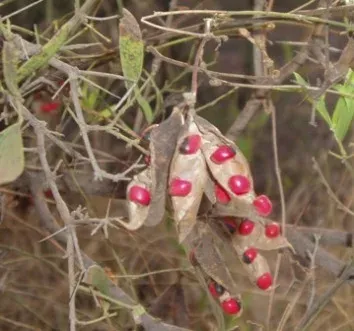
Glycine falcata is a perennial herbaceous plant belonging to the Fabaceae family, native to Australia and known for its high resilience in diverse environmental conditions.
The sowing process typically commences at the beginning of the rainy season, ensuring that the soil retains sufficient moisture to support the initial stages of germination and deep root development.
Due to the hard seed coat, scarification is often required to break seed dormancy and ensure uniform emergence, which is a crucial step for achieving the desired stand density.
Seeds should be planted at a shallow depth of approximately 2 to 3 centimeters, allowing the seedling to emerge efficiently without exhausting its food reserves.
Effective weed management is essential during the establishment phase, as the plant grows relatively slowly during its first weeks of life compared to aggressive weed species.
Growing requirements
This crop is highly versatile regarding soil types, performing well in various textures from clays to loamy sands, making it an excellent candidate for degraded land restoration.
The plant thrives in full sunlight; shading should be avoided to prevent significant reductions in biomass accumulation and overall photosynthetic efficiency.
Glycine falcata is highly drought-tolerant, utilizing its robust root system to access deep water reservoirs, which is a key trait for surviving in regions with erratic rainfall patterns.
It adapts well to a broad range of soil acidity, though neutral or slightly acidic conditions are preferred for maximizing nutrient availability and nitrogen fixation efficiency.
Its ability to form symbiotic relationships with specific rhizobia ensures nitrogen self-sufficiency, reducing the dependency on external synthetic nitrogen fertilizers.
Yield
The primary agricultural utility of Glycine falcata lies in its high-quality forage value, providing a protein-rich food source for livestock in challenging dry-land environments.
Livestock producers value the plant for its ability to regrow rapidly after controlled grazing or mowing, provided that the stocking rate is managed to prevent overgrazing.
The nutritional composition of the plant, rich in nitrogen and minerals, supports healthy livestock development, particularly during seasons when other grasses become dormant.
Seed yield varies depending on the environmental conditions, yet with optimized management practices, sufficient quantities can be harvested for large-scale field expansion.
As a multi-purpose legume, it also aids in improving soil nitrogen levels, providing long-term benefits to the fertility of the pastures it occupies.
Main diseases and pests
Fungal pathogens represent the most significant threat to the crop, especially in humid conditions where leaf spots and stem rots can proliferate and reduce plant health.
Pests such as aphids and various larvae can cause extensive damage to foliage, requiring regular monitoring and integrated pest management strategies to protect the crop.
Preventing soil saturation through proper drainage is a critical management practice, as stagnant water serves as a catalyst for root-rot infections.
Crop rotation practices should be strictly followed to minimize the buildup of host-specific diseases, particularly when transitioning from or to other legume species.
Managing the plant competition in the initial stages is vital, as heavy weed pressure can compromise the establishment of the legume population and overall yield potential.