
Glycine canescens
Glycine canescens
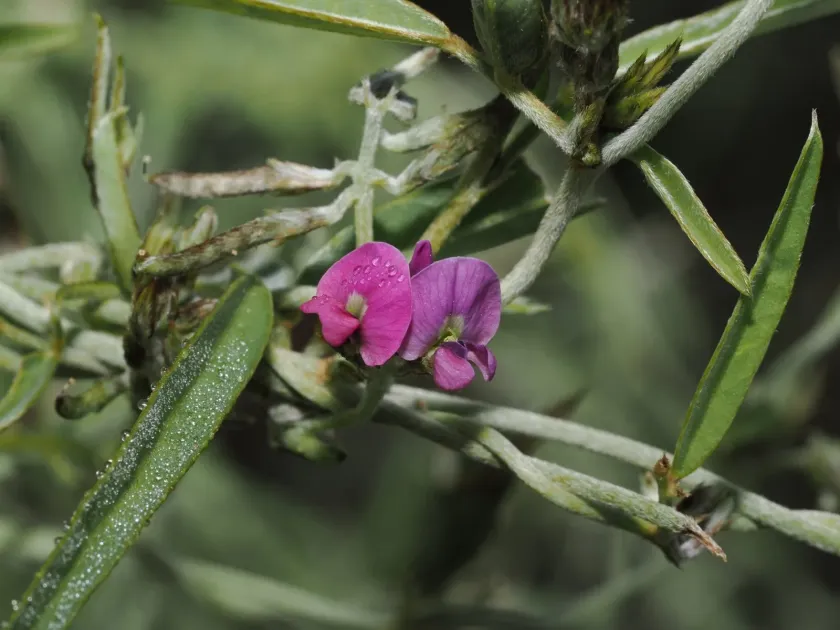
Description
Sowing dates
Glycine canescens is a perennial herb that requires careful management during the sowing phase. In agricultural research, seeds are typically sown in early spring once soil temperatures are sufficient to support consistent germination, usually above 18–20 degrees Celsius.
To ensure high germination rates, pre-sowing treatments such as seed coat scarification are highly recommended due to the hard nature of the seed coat in this species. Uniform sowing depth of 2 to 3 centimeters is vital for the successful establishment of the seedlings.
Field layouts should account for the plant's spreading habit, which benefits from moderate spacing between rows. A distance of 30–40 centimeters between individual plants is generally sufficient to allow for vegetative expansion without excessive competition.
In nursery or greenhouse conditions, transplanting seedlings is an effective alternative to direct seeding. This method allows for better control over early growth stages and ensures that the plants are robust enough before being placed in the field.
Sowing in clean, weed-free seedbeds is essential to minimize competition during the early establishment phase. Adequate soil moisture levels must be maintained immediately following sowing to facilitate the imbibition process and the emergence of the radicle.
Growing requirements
Glycine canescens is a legume belonging to the Fabaceae family, native to Australia. It is highly regarded for its potential as a genetic resource for improving domesticated soybean crops, particularly regarding stress tolerance and drought resistance.
The plant thrives in well-drained soils, preferring sandy loams with neutral or slightly acidic pH levels. It is susceptible to waterlogging, so selecting sites with adequate drainage or cultivating in raised beds is necessary to prevent root health issues.
As a sun-loving species, Glycine canescens requires full exposure to sunlight to achieve optimal physiological development and reproductive success. Shaded environments tend to produce elongated, weak stems that reduce the overall biomass and seed production.
It exhibits significant adaptive capacity to varied temperatures, making it a robust species in arid environments. However, providing supplemental irrigation during prolonged drought periods can enhance the production of biomass and improve overall plant health.
Soil fertility management should focus on balanced nutrient availability. While these plants possess nitrogen-fixing capabilities, moderate application of phosphorus and potassium can strengthen the root structure and support the flowering stages of the plant.
Yield
The primary yield objective for Glycine canescens is the production of high-quality seeds for research and genetic conservation. It is not typically grown for mass forage production, though its biomass potential is of interest in specialized ecological studies.
Seed yield varies depending on the environmental conditions and the intensity of management practices. Proper pollination is a key factor in maximizing the number of pods, often requiring the presence of pollinators to ensure high seed set.
In experimental plots, productivity is maintained through precise water management and pest control. By optimizing these factors, researchers can ensure a consistent supply of seeds for ongoing breeding programs and comparative genetic studies.
While total green matter yield is secondary, the vegetative growth of Glycine canescens can contribute to soil improvement when used in polyculture systems. Its deep root system helps in stabilizing soil structure and improving nutrient cycling within the root zone.
Future agricultural applications may explore its potential as a cover crop or an additive to forage mixtures, given its inherent resilience. Further research is needed to determine the biomass production potential under different climatic conditions.
Main diseases and pests
Root rot pathogens represent the most significant threat to Glycine canescens, particularly in poorly drained soils. Excessive soil moisture triggers fungal growth, which can rapidly compromise the health of the plant's vascular system.
Aphids are common pests that target young tissues, causing stunted growth and leaf distortion. Regular scouting for these insects is necessary to initiate early intervention before populations reach levels that cause irreversible damage to the plant.
Spider mites can be particularly troublesome in hot and dry climates, as they suck sap from the foliage, leading to chlorosis and early senescence. Using bio-rational pesticides or biological controls is often more effective than harsh chemical treatments.
Viral diseases can be transmitted by insects, necessitating strict management of the pest population. Maintaining spatial isolation from other susceptible legumes is a core strategy in preventing the spread of diseases within the experimental plots.
Good agricultural practices, including crop rotation and the removal of host weeds, serve as the best defense against these threats. Healthy plants with optimized nutrient levels are inherently more resistant to opportunistic pests and diseases.
Harvesting
Harvesting Glycine canescens requires careful timing to ensure that seeds reach full physiological maturity. The pods should turn brown and brittle before harvest, indicating that the seeds have developed their storage proteins and carbohydrates.
Due to the risk of pod shattering, harvest must be performed promptly once maturity is reached. Manual harvesting is usually preferred for small-scale operations to minimize seed loss and ensure the highest possible quality of the retrieved genetic material.
Post-harvest processing involves air-drying the harvested material in a well-ventilated, shaded area. Preventing exposure to high heat is crucial, as extreme temperatures can degrade seed quality and reduce the long-term viability of the embryos.
Once dried, the seeds should be cleaned to remove debris that could harbor moisture or pathogens. Using specialized sieves or air-cleaning devices ensures that only pure, healthy seeds are kept for storage or further experimental use.
Proper storage is the final step in maintaining the genetic value of Glycine canescens. Seeds should be stored in moisture-proof containers under cool, stable conditions to ensure they remain viable for several years for future research and breeding.