
Glycine latrobeana
Glycine latrobeana
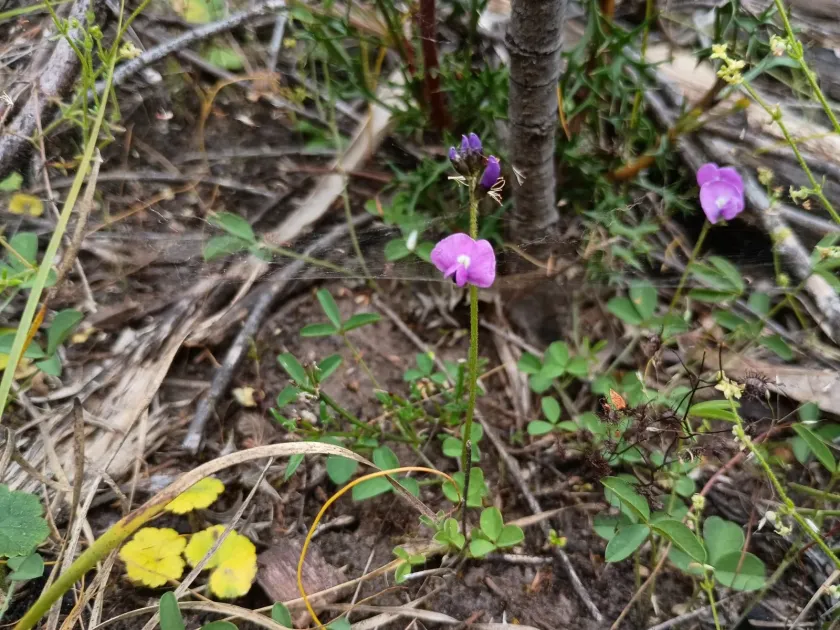
Description
Sowing dates
Glycine latrobeana is a perennial herb belonging to the Fabaceae (legume) family. In its natural habitat, reproduction occurs through seeds that mature in pods after the flowering cycle concludes.
The germination period of seeds in the wild is closely linked to seasonal rainfall patterns. For cultivation in controlled environments, seed stratification is necessary due to inherent dormancy mechanisms developed through evolutionary processes.
Sowing seeds in specialized nurseries or botanical gardens is recommended during the Australian spring. This ensures optimal temperature conditions for root system development before the onset of intense summer heat.
An essential aspect is the preservation of genetic diversity, therefore seed material should be collected with a focus on maintaining populations in their natural range. The species is currently not utilized in industrial crop production.
The plant possesses a specific growth habit, forming thin stems. It has the ability to form colonies through vegetative spreading, which provides resilience against local climatic fluctuations.
Growing requirements
This species is native to the southeastern part of Australia, including the states of Victoria and Tasmania. The plant prefers moderately moist, well-drained soils and is often found in open grasslands or woodlands.
Light requirements are characterized by a need for direct sunlight or partial shade. The plant does not tolerate being fully shaded by dense forest canopies, as it requires intense photosynthesis to accumulate sufficient biomass.
The plant has no rigid requirements regarding soil texture, though it performs best on loamy soils with good water-holding capacity. Excessive moisture combined with poor drainage can lead to stunted growth.
The temperature regime should be moderate, typical of regions with mild winters. Glycine latrobeana is adapted to short-term cold spells but is sensitive to extreme frost, which can damage its above-ground parts.
In terms of agricultural management, it is important to consider inter-species competition. Like many legumes, this plant forms a symbiotic relationship with nitrogen-fixing bacteria, which enriches the soil and promotes local fertility.
Main diseases and pests
The primary threat to this species is habitat alteration resulting from intensive livestock grazing and agricultural land development. Invasive plant species actively displace Glycine latrobeana from its natural niches.
Regarding diseases, fungal root infections are a concern when soil moisture regimes are disturbed. Excessive water triggers the development of root rot, which spreads rapidly through dense plant populations.
Pests, such as weevils and specific aphid species, may cause damage to foliage and reproductive organs. However, in wild populations, the scale of damage rarely reaches critical levels that would threaten the survival of the species.
Herbivores, including introduced rabbits and sheep, pose a serious threat. Grazing on young shoots prevents flowering and seed production, which significantly reduces the potential for natural regeneration.
Anthropogenic factors, such as improper mowing or harvesting schedules, also negatively impact the population. Optimal site management requires strict adherence to conservation protocols and active control of invasive weeds.