
Ebenopsis ebano
Ebenopsis ebano
Description
Growing requirements
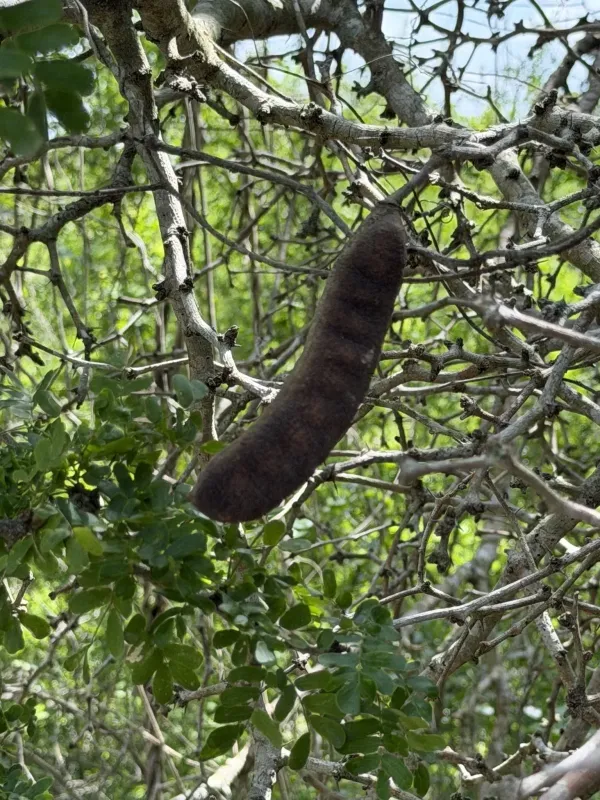
Ebenopsis ebano, commonly known as Texas ebony, is a slow-growing evergreen tree belonging to the Fabaceae family. It is native to the semi-arid regions of northeastern Mexico and southern Texas, where it thrives in harsh environmental conditions.
The tree exhibits dense, dark green bipinnate foliage and possesses a structural, rugged bark. One of its distinct botanical features is the presence of sharp stipular spines on the branches, which serve as an effective defense mechanism against herbivores.
This species is highly adapted to calcareous, alkaline, and well-drained soils. It exhibits exceptional drought tolerance and requires full sun exposure to maintain its characteristic compact crown shape and overall health.
Agronomic management involves selecting sites with excellent soil drainage to prevent root rot. While established trees require minimal irrigation, juvenile plants benefit from regular watering to ensure deep root establishment during their initial growth phase.
Economically, Ebenopsis ebano is highly valued for its dense, dark, and heavy heartwood, which is used in high-end woodworking and artisanal crafts. Additionally, it serves as an excellent plant for erosion control and xeriscaping projects.
Main diseases and pests
Common biological threats include various bruchid beetles that target the seeds within the pods, potentially impacting germination rates and natural propagation.
Root system vulnerability arises in poorly drained soils, where water stagnation encourages the development of fungal pathogens like Phytophthora species.
Young saplings are frequently browsed by wildlife, which necessitates the use of physical guards during the first few years after planting in wild or semi-wild landscapes.
In high humidity environments, the tree may suffer from localized foliar diseases, particularly powdery mildew, if air circulation within the dense canopy is restricted.
Integrated pest management should focus on soil moisture regulation and physical protection of juvenile trees to minimize the need for chemical intervention.