
Chamaecrista falcinella
Chamaecrista falcinella
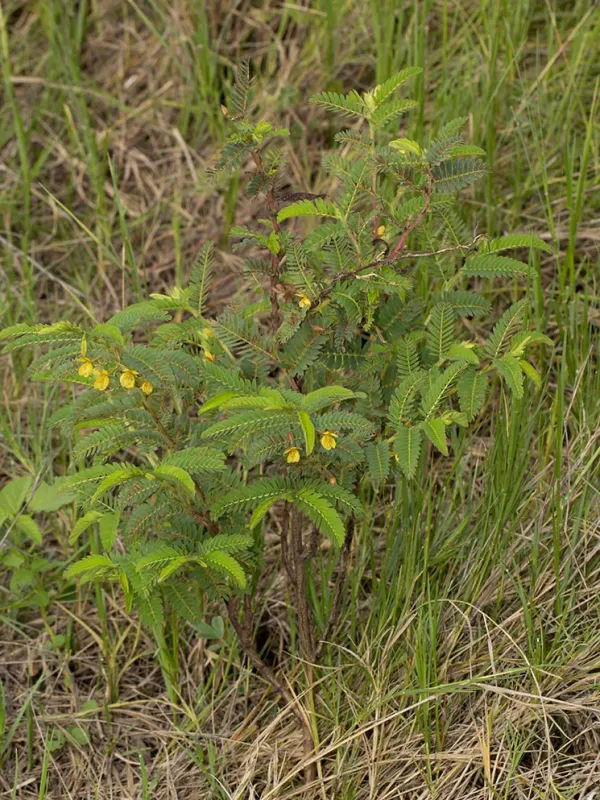
Description
Sowing dates
Chamaecrista falcinella is a thermophilic legume species that requires warm, frost-free periods to establish a robust and productive root system.
The optimal planting time coincides with the start of the rainy season to ensure that seeds germinate rapidly and consistently across the entire field.
Seeds should be sown at a shallow depth of approximately 2–3 centimeters, ensuring good soil-to-seed contact to promote successful emergence.
Row planting is recommended over broadcasting to facilitate weed management and allow for better airflow through the developing plant canopy.
Under controlled greenhouse conditions, seeds require consistent warmth, ideally maintained above 20 degrees Celsius, to achieve high germination rates.
Growing requirements
This crop thrives in well-drained, sandy or loamy soils that prevent waterlogging, which is a significant factor for healthy root development.
Chamaecrista falcinella requires full solar exposure and is highly sensitive to shading, which can significantly inhibit its biomass accumulation.
It shows remarkable adaptation to drought conditions once the root system is well-established, making it a resilient choice for dryland farming.
The soil should have a neutral to slightly acidic pH, which optimizes the symbiotic relationship with nitrogen-fixing bacteria in root nodules.
Minimal fertilization is required if soil conditions are adequate, though phosphorus and potassium applications can boost overall vigor and yield.
Yield
Chamaecrista falcinella is highly valued for its ability to produce significant amounts of biomass, serving as an excellent green manure crop.
By fixing atmospheric nitrogen, the plant contributes substantially to soil fertility, enhancing the performance of subsequent crop rotations.
The yield of green material is closely linked to water availability and the length of the growing season, with multiple cuts possible in tropical regions.
Seed yield remains consistent under proper management, allowing farmers to maintain their own supply for subsequent planting cycles.
The incorporation of this legume into agricultural systems helps to maintain soil structure and organic matter levels over long-term cultivation.
Main diseases and pests
The crop can be susceptible to various fungal diseases that are primarily triggered by high humidity levels and poor ventilation within the stand.
Root rots pose a serious threat if the soil profile remains saturated for extended periods, stressing the plant and encouraging pathogenic growth.
Insect pests that target foliage can occasionally cause damage, potentially reducing the photosynthetic capacity and overall biomass yield of the plant.
Strategic crop rotation and the removal of plant debris help to interrupt the disease cycle and keep pathogenic pressure to a manageable minimum.
Monitoring the crop for signs of chlorosis or wilting is essential for early detection and mitigation of potential threats during the growing phase.
Harvesting
Green manure harvesting should be timed to occur before the onset of heavy seed maturation to maximize the nutrient content within the biomass.
Seed harvesting requires careful timing; the pods should be brown and dry to ensure that seeds reach their full maturity and potential viability.
Mechanical harvesting equipment must be calibrated to minimize pod shattering, which is a common occurrence during the drying phase in the field.
Post-harvest handling involves thorough cleaning and drying to reduce moisture content, preventing the development of mold during storage.
Seeds should be stored in cool, dry conditions inside sealed containers to maintain their vigor and germination capacity for future seasons.