
American groundnut
Apios americana Medik.
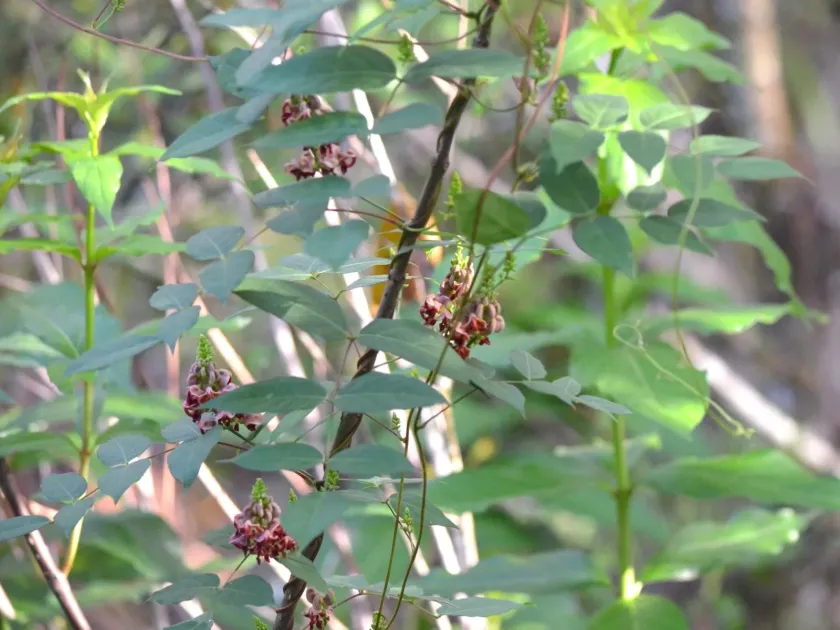
Description
Sowing dates
Apios americana, commonly known as the American groundnut, is a perennial vining legume native to North America. It is prized for its edible, protein-rich tubers which are connected by subterranean stolons.
Propagation is primarily achieved vegetatively by planting tubers in the spring once the soil temperature consistently exceeds 10 degrees Celsius. Ensure the planting site is well-prepared with loose, friable soil.
Tubers should be planted at a depth of 5 to 10 centimeters. Proper spacing is essential for maximum yield, with 30 to 40 centimeters between individual plants and rows spaced at least 60 to 90 centimeters apart.
As a climbing vine, Apios americana requires robust trellising systems. Without vertical support, the plant is prone to overcrowding and decreased photosynthetic efficiency, which hinders tuber development.
While seed propagation is possible, it is rarely used in commercial or garden settings due to long dormancy requirements and low germination rates. Using selected clonal tuber stock ensures uniform plant vigor.
Growing requirements
The groundnut thrives in loose, well-drained soils, preferably sandy loam. It is highly sensitive to waterlogged conditions, which can lead to rot in the tuberous root system.
The plant performs best in a sunny location but can tolerate partial shade. A long growing season is essential, as the plant requires significant time to mature its tubers after the foliage develops.
Being a nitrogen-fixing legume, the plant can thrive in lower nitrogen environments. However, it benefits from moderate levels of phosphorus and potassium to support tuber enlargement and plant health.
Maintaining consistent soil moisture is crucial, especially during the peak of summer. Prolonged drought can stunt the growth of the tubers, leading to a significant reduction in total seasonal yield.
Mulching is a highly recommended practice to keep the root zone cool and moist. Organic mulch also helps suppress competing weeds, which are a major threat to young, slow-growing vines.
Yield
Tuber yield is typically low during the first year as the plant establishes its perennial root structure. Significant harvestable yields are usually achieved starting from the second year onwards.
In optimal conditions, a well-established patch can yield between 1 and 2 kilograms of tubers per square meter. Tubers vary in size, generally ranging from 2 to 7 centimeters in diameter.
The nutritional profile of the tubers is excellent, containing up to 15-20% protein and a significant amount of complex carbohydrates, often making them a superior food source to traditional potatoes.
Harvesting strategies can influence total yield. Selective harvesting of larger tubers while leaving smaller ones in the ground encourages the patch to continue producing for multiple years.
Because the plant is a perennial, the patch can be productive for several years if managed correctly, significantly lowering labor costs associated with annual soil preparation and replanting.
Main diseases and pests
Apios americana is generally quite hardy, but it is susceptible to fungal root rots in heavy or saturated soils. Maintaining soil drainage is the primary defense against such pathogens.
Small mammals and rodents are significant pests, as they may dig up and feed on the sweet, starchy tubers during autumn and winter months, potentially destroying entire sections of the planting.
Foliar pests like aphids and spider mites may occasionally appear during hot, dry spells. Integrated pest management, focusing on biological controls, is usually sufficient to handle these issues.
Weed management is critical, especially during the establishment phase. The vine is initially slow to grow and can be easily outcompeted by aggressive grasses or invasive broadleaf weeds.
Mechanical cultivation should be minimized near the root zone to avoid injuring the delicate stolons and tubers, which can provide entry points for soil-borne infections.
Harvesting
The harvest should take place in late autumn, after the first frost has killed off the foliage. This timing ensures that the plant has translocated all available nutrients into the storage tubers.
Use a garden fork to carefully lift the tubers from the ground. Start away from the base of the plant to avoid slicing through the tubers; work carefully towards the center of the patch.
Clean the harvested tubers gently, removing loose soil. They should be air-dried for a short period in a shaded, cool environment before being sorted for immediate use or long-term storage.
Storage is best managed in a cool cellar (2-4 degrees Celsius). Placing the tubers in damp sand or sawdust prevents desiccation and keeps them firm for several months throughout the winter.
Many growers prefer to leave a portion of the harvest in the ground until early spring to prevent the tubers from drying out in artificial storage, provided the ground does not freeze solid.