
Duval's Spurge
Euphorbia duvalii
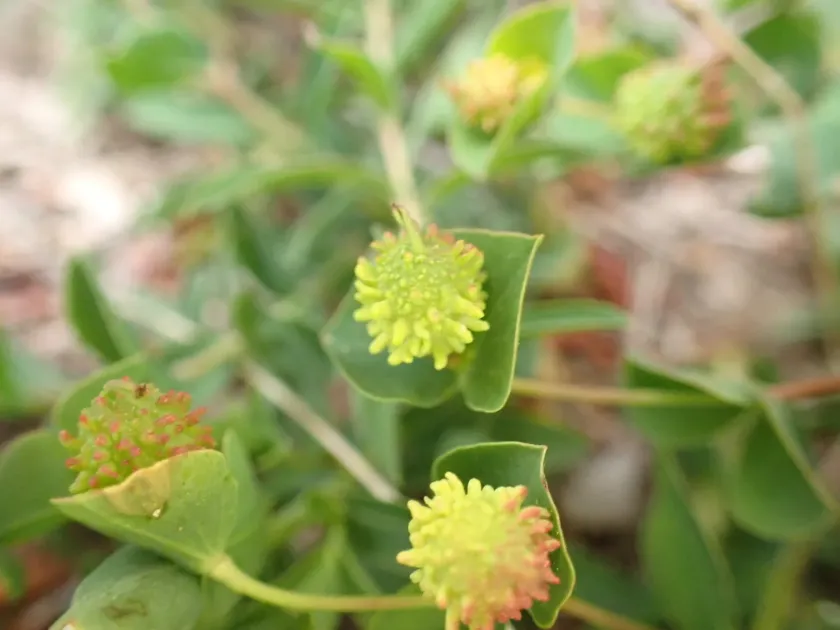
Description
Growing requirements
Duval's Spurge (Euphorbia duvalii) is a perennial herbaceous plant belonging to the Euphorbiaceae family. It is recognized for its adaptation to specific ecological niches, primarily characterized by well-drained and sunny environments.
The cultural requirements of this species focus on soil structure. It thrives in porous, sandy, or rocky soils where moisture does not accumulate, as the root system is highly susceptible to hypoxia if waterlogged for extended periods.
In terms of climate, the plant exhibits significant drought tolerance once established. It requires full sun exposure to maintain its structural integrity and ensure the proper formation of its characteristic inflorescences known as cyathia.
Botanically, Euphorbia duvalii is defined by its latex-rich stem tissue, which serves as a physiological defense mechanism. The growth pattern is generally upright, with a tendency for moderate branching depending on the nutritional status of the substrate.
Regarding agrotechnology, the maintenance is minimal. Fertilizer application should be conservative, as the plant is adapted to nutrient-poor soils. Pruning is limited to removing dead foliage to maintain plant vigor and encourage secondary growth during the active season.
Main diseases and pests
The primary threats to Euphorbia duvalii are associated with fungal pathogens, particularly Phytophthora and Pythium species, which thrive in moist conditions. These pathogens cause root and crown rot, which are often fatal to the plant.
Aphids represent the most significant invertebrate threat. They cluster on the stems and leaves, feeding on the plant's sap. Their feeding activity not only weakens the plant but also promotes the growth of sooty mold due to honeydew secretions.
Spider mites are common in arid, hot conditions. They cause localized yellowing and stippling on the leaves, leading to reduced photosynthetic capacity and premature leaf senescence if left untreated.
Effective pest and disease management involves a combination of cultural practices and chemical interventions. Maintaining adequate spacing between plants is essential to promote air circulation and reduce the humidity levels that favor fungal development.
- Regular inspection of the plant base for rot signs.
- Application of systemic insecticides for aphid control.
- Utilization of acaricides during periods of low humidity to suppress mites.