
Dog's mercury
Mercurialis perennis
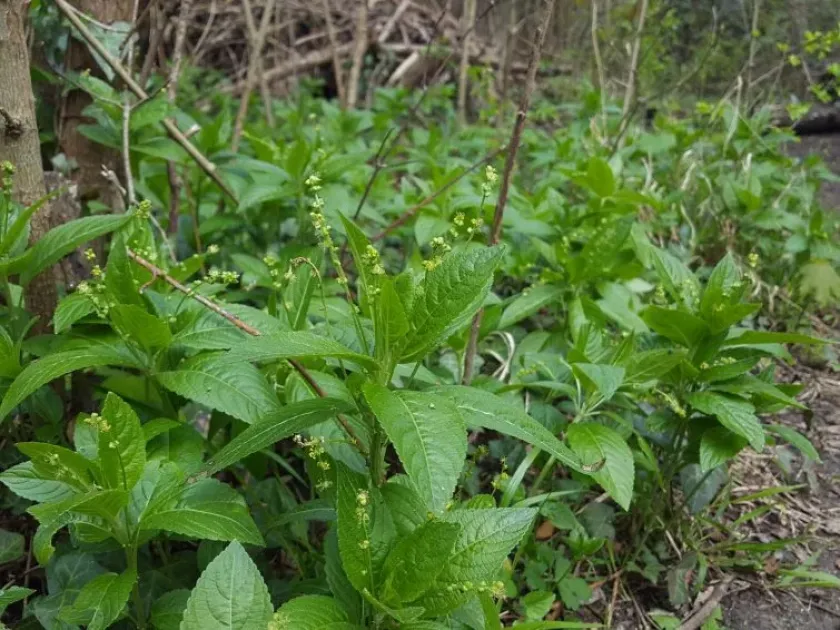
Description
Growing requirements
Dog's mercury (Mercurialis perennis) is a perennial herb belonging to the Euphorbiaceae family. It is widely distributed across temperate regions, typically found in shady, moist woodland environments with nutrient-rich soils.
The plant is characterized by a creeping rhizome system that allows it to spread vegetatively, often forming dense, uniform stands on the forest floor. It features simple stems and dark green leaves with serrated margins.
From an ecological perspective, this species thrives in soil with neutral to slightly alkaline pH levels. It is highly shade-tolerant, making it an indicator species for undisturbed, ancient deciduous woodland ecosystems.
It is crucial to note that the plant is poisonous. It contains volatile oils and compounds like mercurialin, which cause skin irritation and gastrointestinal distress if ingested by humans or livestock.
While the plant has historical records of medicinal use, its toxicity makes it unsuitable for standard agricultural production. No commercial cultivation techniques exist, as it is primarily managed for conservation or biological studies.
Main diseases and pests
The toxicity of the plant acts as a natural defense mechanism against herbivory, meaning it is rarely targeted by common insect pests or larger grazing animals.
Under specific environmental conditions such as poor ventilation and high humidity, the plant may suffer from fungal infections, including leaf rusts or mildews, which can impact its vegetative vigor.