
Tetratheca
Tetratheca Sm.
Tetratheca Sm. is a genus of evergreen shrubs belonging to the Elaeocarpaceae family, native primarily to various regions of Australia. These plants exhibit significant morphological diversity depending on their specific habitat, which ranges from rocky slopes to dense forest understories.
What the section contains

Tetratheca
From an agronomical perspective, Tetratheca requires specialized soil conditions. The plants thrive in well-drained, acidic, and low-nutrient soils. It is critical to avoid waterlogging, as the root system is highly sensitive to hypoxia, which can quickly lead to fungal infection and plant death.
A key aspect of cultivating this species is the strict avoidance of phosphorus-based fertilizers. Like many Australian Proteaceae and related flora, Tetratheca has adapted to survive in soils depleted of phosphorus; introducing such nutrients acts as a toxin, causing systemic failure and necrosis.
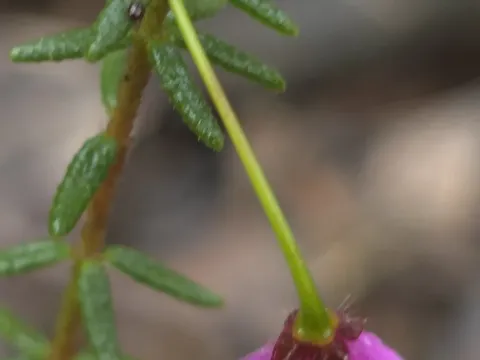
The botanical value of the plant lies in its unique inflorescence, consisting of four-petaled, often nodding flowers that range from delicate pinks to deep, dark purples. The foliage is typically narrow and small, contributing to a refined and delicate appearance that is highly sought after by botanical gardens.
In terms of practical utility, the plant is used almost exclusively in ornamental horticulture and niche gardening. While not a commercial field crop, it remains a significant subject for research regarding the adaptation of native Australian species to controlled container environments and conservatory cultivation.