
Foveolate stoneberry
Elaeocarpus foveolatus
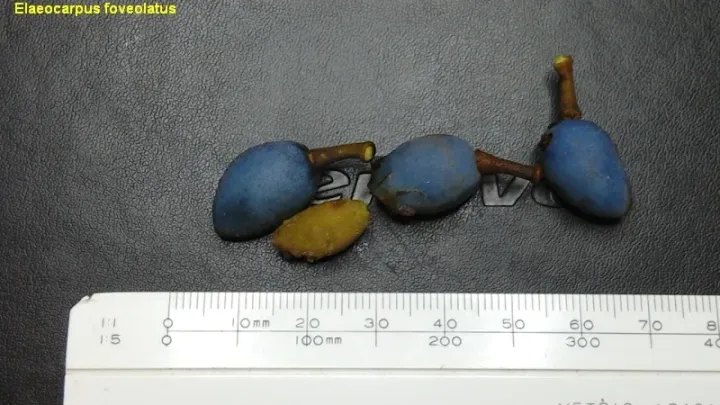
Description
Growing requirements
The foveolate stoneberry (Elaeocarpus foveolatus) is a perennial woody plant belonging to the Elaeocarpaceae family. It is indigenous to tropical regions where high humidity and warm temperatures persist throughout the entire year.
The plant thrives in stable climatic conditions with temperatures generally between 20°C and 28°C. It is extremely vulnerable to frost, making it suitable only for specific tropical agro-ecological zones or controlled environments.
Optimal growth requires fertile, well-drained loamy soils. Ensuring efficient water drainage is vital to avoid root rot, as the species does not tolerate waterlogging under any circumstances. pH levels should be maintained in the slightly acidic to neutral range.
During its juvenile stage, the tree requires partial shade to protect its leaves from intense solar radiation. As the tree matures, it develops a higher tolerance for direct sunlight and becomes a significant part of the forest canopy.
The name foveolatus refers to the distinct pits or foveae found on the underside of the leaves. These structures are a key botanical feature that helps the plant manage gas exchange and humidity regulation in its native habitat.
Harvesting
The primary economic value of the foveolate stoneberry lies in its durable timber. The wood is appreciated for its structural integrity and is used in local furniture production and general construction projects.
Harvesting timber requires strict adherence to sustainable forestry practices to ensure long-term availability of the resource. Selective logging is often the preferred method to maintain the forest ecosystem's stability.
The fruit of the tree can also be collected for propagation purposes. Harvest timing is critical and occurs when the fruits reach full physiological maturity, typically indicated by a specific change in external coloration.
Post-harvest handling involves careful cleaning and drying of seeds if they are intended for the nursery phase. Improper moisture control during storage can lead to rapid loss of seed viability and overall germination rates.
In addition to timber, some varieties within the genus are researched for their potential medicinal properties contained within their seeds or bark. Further investigation is ongoing to quantify the biochemical benefits of this species for commercial use.