
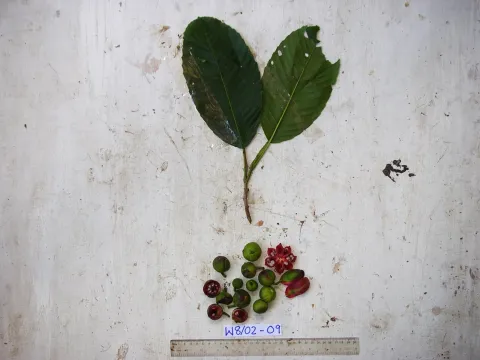
Chestnut-leaved dillenia
Dillenia castaneifolia
Dillenia castaneifolia, commonly known as the chestnut-leaved dillenia, belongs to the Dilleniaceae family. This evergreen tropical tree is native to the Indonesian archipelago, particularly Sulawesi, where it thrives in warm, humid forest environments.
What the section contains
Chestnut-leaved dillenia
The climate requirements for this species are strict. It requires a constant tropical climate with temperatures generally ranging between 22°C and 30°C. Protection from frost and extreme cold is essential, as the tree is not cold-hardy and will suffer significant damage if temperatures drop.
Soil conditions are critical for the health of Dillenia castaneifolia. It prefers deep, nutrient-rich soils that have excellent drainage capacity. While the tree appreciates high moisture levels, it cannot tolerate standing water or heavy waterlogged soils, which may cause root rot.
Regarding light exposure, young trees require partial shade to mirror their natural forest understory habitat. As the trees mature, they become more adaptable to sunlight, though diffused light remains optimal to prevent leaf scorching and ensure lush green foliage.
Agricultural management involves routine nutrient application, particularly organic matter, to sustain its rapid vegetative growth. Soil pH should ideally be maintained in the slightly acidic to neutral range to ensure optimal nutrient uptake and overall plant vigor.
The chestnut-leaved dillenia is primarily cultivated for its edible fleshy fruits, which are highly regarded in local culinary traditions. The fruit is known for its distinct, slightly acidic flavor, making it a valuable ingredient for preserves, jellies, and sauces.
Harvesting is performed manually once the fruits reach physiological maturity. Due to the tree's growth pattern, the harvest season may extend over several weeks, requiring regular monitoring to ensure that only fully developed fruits are picked.
Post-harvest handling is vital to preserve the fruit quality. Because the fruits are relatively soft, they require gentle handling and immediate cooling to prevent bruising and to maintain shelf life during transport to local or regional markets.
Beyond food production, the wood of the Dillenia genus is often utilized for construction and carpentry due to its hardness and durability. Sustainable harvesting of wood is an secondary aspect of managing stands of this species in certain areas.
Future prospects for the cultivation of this crop involve improving selection methods to increase fruit yield and uniformity. Ongoing research in local agroforestry projects aims to promote the chestnut-leaved dillenia as a sustainable fruit crop for tropical climates.