
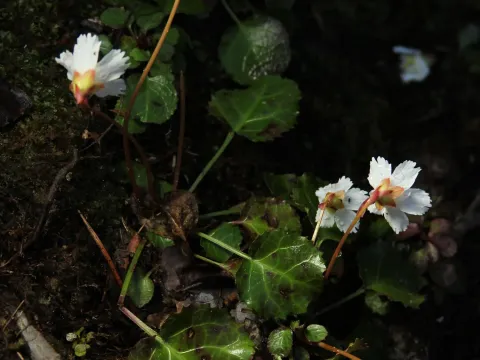
Shortia
Shortia
Shortia is a genus of evergreen perennial flowering plants belonging to the Diapensiaceae family. Known for their delicate, bell-shaped flowers and glossy, rounded leaves, these plants are native to the high-altitude forests of Eastern Asia and the Appalachian Mountains in North America.
What the section contains
Shortia
Botanically, Shortia thrives as an understory plant, requiring cool, humid environments to flourish. The leaves often undergo color changes throughout the seasons, shifting from deep green in summer to bronze or reddish hues in the winter months, adding value to garden aesthetics.
To cultivate Shortia successfully, one must replicate its natural woodland habitat. It requires partial to full shade, protected from intense afternoon sunlight. Exposure to high heat and direct sun will quickly dehydrate the plant and cause significant leaf damage.
Soil quality is a critical factor for growth. The ideal medium is a loose, acidic, and moisture-retentive soil, typically rich in decaying organic matter such as leaf mold or pine needles. Efficient drainage is non-negotiable to prevent root rot in these sensitive mountain plants.
In landscaping, Shortia is highly prized by alpine garden enthusiasts and collectors. It is typically used for carpeting damp, shady areas or as a focal point in specialized rock gardens. Its slow growth rate makes it ideal for permanent, low-maintenance planting schemes.
Fungal issues, specifically those related to root and crown rot, pose the greatest threat to Shortia. These conditions are usually triggered by poor soil drainage or improper watering practices that lead to waterlogged conditions around the plant's base.
Garden pests such as slugs and snails are particularly problematic, as they frequently target the tender young shoots and leaves. Gardeners should employ preventative measures, such as mulching with coarse materials or using organic bait, to ensure the plant remains undisturbed.