
Scirpodendron ghaeri
Scirpodendron ghaeri
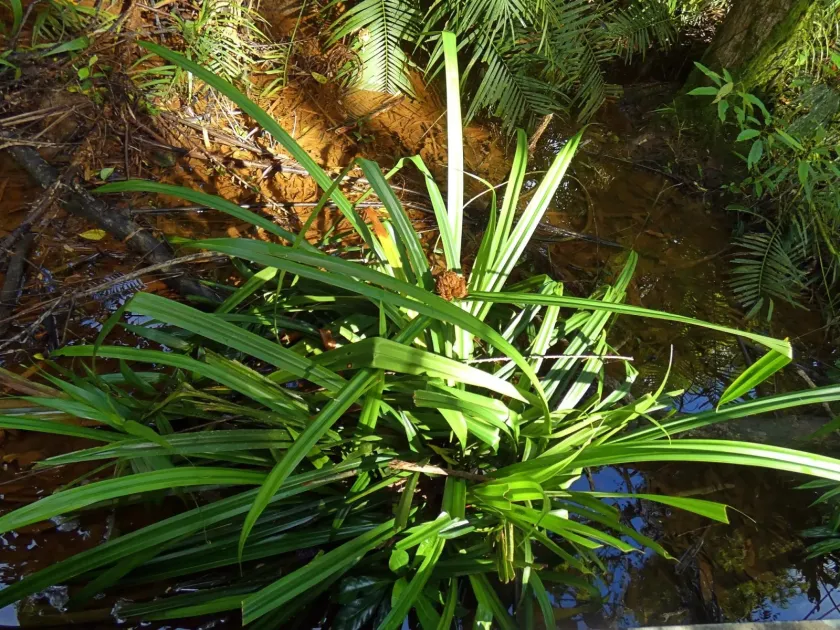
Description
Growing requirements
Scirpodendron ghaeri is a distinctive perennial herb belonging to the Cyperaceae family. Unlike typical grasses, this species is noted for its size and structural robustness, often appearing as a large, palm-like sedge in its native habitat.
The plant is native to the tropical regions of Southeast Asia and the Pacific Islands. It thrives in humid environments, typically found in swampy forests, along riverbanks, and in areas where the soil remains consistently saturated throughout the year.
Temperature requirements are strictly tropical, necessitating warm conditions without frost. The plant exhibits high sensitivity to environmental stress if exposed to prolonged drought or significant temperature fluctuations, which can hinder its growth.
Soil requirements for this species involve nutrient-rich, wet substrates. It is exceptionally well-adapted to anaerobic conditions, often occupying niches that would be unsuitable for most other agricultural crops due to high water levels.
Botanically, the plant features a dense rosette of long, leathery, and fibrous leaves. These leaves are the primary part of the plant utilized for commercial and artisanal purposes, characterized by their high tensile strength.
Harvesting
The primary agricultural use of Scirpodendron ghaeri is the harvesting of its fibrous leaves. These leaves serve as a traditional raw material for weaving mats, baskets, and other durable household goods in its native range.
Harvesting involves the careful cutting of mature leaves, ensuring that the central growing point remains intact to allow for continued regeneration of the plant. Post-harvest, the leaves undergo a drying process to prepare the fibers for weaving.
This crop is highly valued for its sustainability, as it provides a renewable resource that grows well in environments where traditional agriculture is often not possible due to water logging.
Regarding health and protection, the plant is remarkably resilient against pests. Its tough, fibrous composition and specific habitat create an environment that is naturally discouraging to most common agricultural insects and fungal pathogens.
Further research into the management of Scirpodendron ghaeri could enhance its potential as a sustainable fiber source, provided that environmental stability and humidity requirements are strictly maintained during cultivation.