
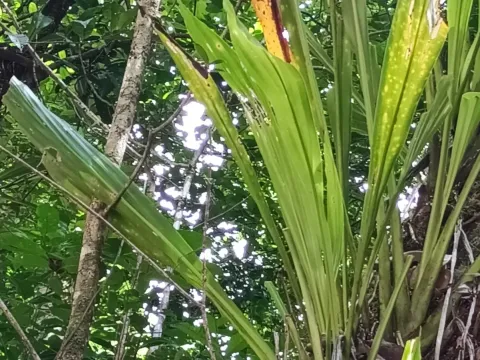
Ludovia
Ludovia
Ludovia, a genus within the Araceae family, is primarily propagated through vegetative methods in professional horticultural settings. Stem cuttings are the standard approach, usually taken during the peak growing season to ensure high rates of success.
What the section contains


Ludovia
Propagation success relies heavily on maintaining a consistently high humidity environment and stable soil temperatures. Proper rooting of the cuttings requires a well-aerated substrate that prevents excess moisture accumulation around the developing roots.
Sterile tools must be utilized during the cutting process to mitigate the risk of pathogen transmission to the plant tissues. The ideal period for planting begins in early spring, as increasing day length and temperatures promote vigorous new growth.
Applying bottom heat to the propagation containers is a highly recommended practice to accelerate root development. This technique helps bridge the gap between initial planting and the establishment of a robust root system capable of supporting further development.
In large-scale production, the timing of planting is dictated by the ability of greenhouse facilities to provide a controlled climate. By managing lighting and humidity levels precisely, producers can achieve uniform growth cycles throughout the year.
Ludovia demands a specialized environment characterized by high relative humidity, ideally kept between 70 and 80 percent. Maintaining this moisture level is essential for preventing leaf tip browning and ensuring the overall vitality of the plant.
The growing substrate must be rich in organic matter and possess a slightly acidic pH. Efficient drainage is crucial to prevent the soil from becoming waterlogged, which can quickly lead to root rot and other physiological complications in this sensitive tropical genus.
Light requirements for Ludovia include bright but strictly indirect sunlight. Exposure to direct radiation can cause significant damage to the delicate leaf structures, leading to burning and a reduction in the ornamental value of the crop.
Temperature management is another key factor, with an optimal range between 18 and 26 degrees Celsius. Avoiding cold drafts and keeping the environment stable is necessary to prevent stress-induced growth cessation or foliage loss during the production cycle.
Regular fertilization with balanced liquid nutrients containing microelements is required during the active growth phase. Feeding supports the lush green appearance and overall structural integrity of the plant, which are key quality indicators.
The yield of Ludovia in an agricultural or horticultural context is measured by the production of high-quality, sellable specimens. Due to its moderate growth rate, the production cycle from cutting to a mature plant usually lasts 12 to 15 months.
Productivity is calculated based on the successful establishment of the plants and the density of the greenhouse layout. Maximizing the yield requires optimizing the plant spacing to ensure adequate light penetration and air circulation for each individual.
Final output quality is determined by the leaf size, color intensity, and the maturity of the root system. Producers who maintain rigorous sorting standards ensure that only the healthiest plants reach the market, thereby enhancing the overall reputation of their output.
Standardized greenhouse practices, including the use of high-quality propagation media and precise irrigation, contribute to consistent yields. Reducing the cull rate is the primary strategy for improving profitability in Ludovia cultivation.
Advanced techniques like fertigation allow growers to fine-tune nutrient delivery, which can shorten the production cycle and increase the number of harvestable units. These methods represent the current standard for professional tropical plant management.
Spider mites and scale insects represent the most common pests for Ludovia, often thriving when humidity levels are not properly regulated. Early identification and the use of biological control agents are the preferred methods for management.
Fungal infections, often stemming from poor soil aeration and water management, pose a significant threat to the plant's health. Swift intervention with appropriate fungicides and the correction of drainage issues are necessary to save affected specimens.
Bacterial leaf spot can develop when air circulation is inadequate within the greenhouse environment. Proper spacing and controlled irrigation are essential preventative measures to avoid the conditions that foster these bacterial pathogens.
Quarantine protocols for new plant materials are crucial to prevent the introduction of pests or diseases into the production area. Keeping the facility clean and performing regular inspections allows growers to address health issues before they become widespread.
Maintaining high sanitary standards, including the disinfection of tools and pots, is a fundamental pillar of Ludovia cultivation. These practices minimize the spread of potential pathogens and ensure the long-term health of the entire crop population.