
Sechiopsis triquetra
Sechiopsis triquetra
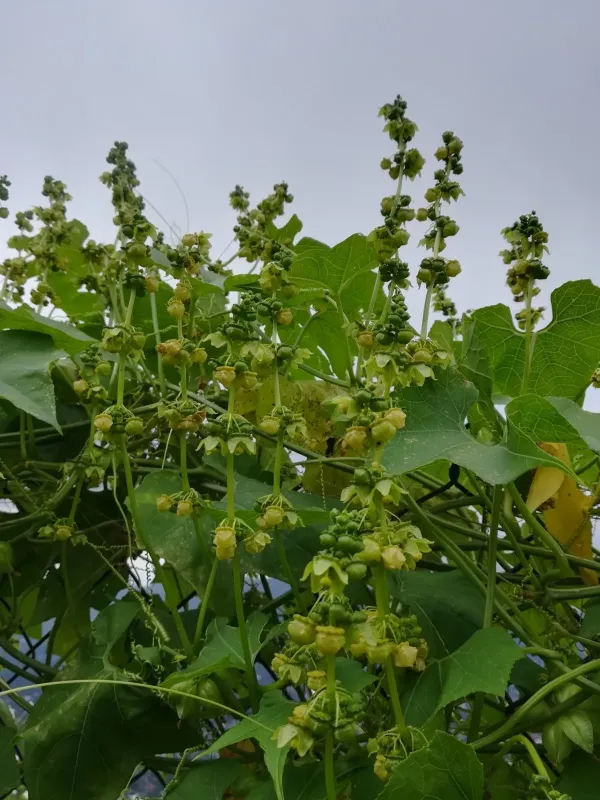
Description
Sowing dates
Sechiopsis triquetra is a climbing plant belonging to the Cucurbitaceae family, known for its vigorous growth and rapid development in suitable tropical climates.
For successful germination, seeds require consistently warm soil temperatures and should be started in a greenhouse or nursery if the outdoor climate is unstable.
Sowing in open ground should be delayed until all risks of frost have passed, as even slight cold exposure can cause significant physiological damage.
Starting seeds in individual peat pots helps reduce root disturbance during the transplanting phase, which is crucial for the plant's overall establishment.
Spacing between plants must be generous, usually 1–1.5 meters, to provide enough room for the trailing vines to spread without excessive competition.
Growing requirements
The plant thrives in full sun exposure, requiring at least six to eight hours of direct light daily to support intensive blooming and fruit setting.
Soil should be rich in organic matter, slightly sandy to ensure excellent drainage, and maintained with a stable moisture level throughout the growing season.
As a climbing vine, Sechiopsis triquetra demands sturdy trellis systems to keep the foliage off the ground and prevent rotting of fruits and stems.
Regular fertilization with compost or balanced NPK fertilizers is recommended to replenish nutrients lost during the plant’s rapid expansion phase.
Wind protection is highly beneficial, as strong gusts can tear the tender leaves and significantly reduce the efficiency of the plant's photosynthetic process.
Main diseases and pests
Powdery mildew is the most common fungal disease, especially in areas with high humidity and poor air movement around the plant canopy.
Spider mites are notorious pests for this crop, often appearing in hot, dry weather and causing stippling and yellowing of the leaves.
Root rot can occur if irrigation management is poor or if the soil lacks sufficient drainage, leading to stagnation in the rhizosphere.
Integrated Pest Management (IPM) practices, such as biological control and timely application of fungicides, are necessary for maintaining healthy yields.
Crop rotation is essential to avoid the buildup of soil-borne pathogens that commonly affect cucurbits in intensive farming environments.
Harvesting
Harvesting is typically carried out by hand once the fruits have attained their characteristic size and firmness, indicating optimal culinary quality.
Frequent harvesting throughout the season encourages the vine to remain productive and prevents the plant from diverting energy into mature seed production.
Since the fruits are relatively perishable, they should be processed or marketed shortly after picking to maintain their freshness and nutritional value.
Care should be taken during the harvest to preserve the integrity of the vine, as the plants remain active and continue producing until the end of the season.
Yield estimation depends on the vigor of the plant, available space, and the presence of sufficient pollinators, which are vital for successful fruit formation.