
Decalobanthus peltatus
Decalobanthus peltatus
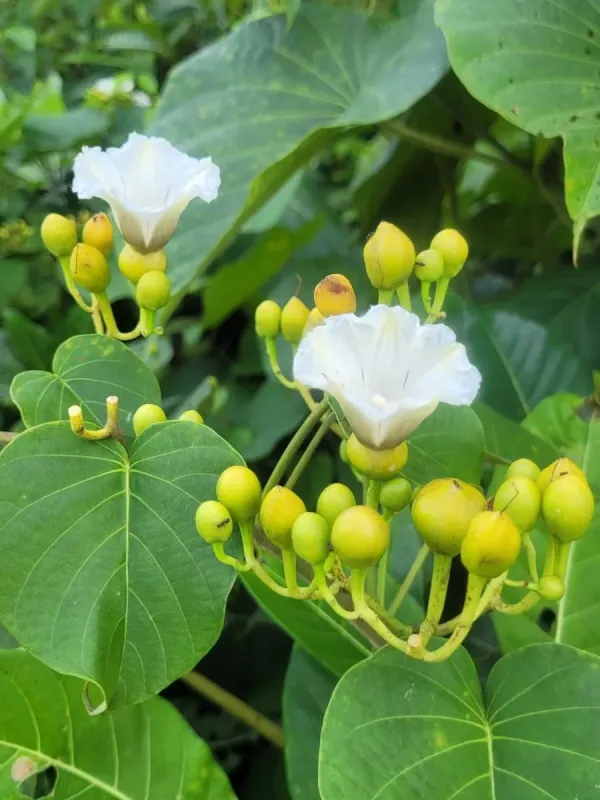
Description
Growing requirements
Decalobanthus peltatus, formerly classified as Merremia peltata, is a vigorous perennial vine belonging to the Convolvulaceae family. It is widely recognized for its rapid growth rate and ability to colonize large areas in tropical environments.
Native to the tropical regions of the Indo-Pacific, this plant is well-adapted to high-humidity environments. It typically thrives in forest clearings and disturbed soils where it can easily find support for its climbing stems.
The climate requirements include consistently warm temperatures, ideally between 22°C and 30°C, throughout the growing season. The plant is extremely sensitive to cold and requires a frost-free environment to maintain its biomass production.
Regarding soil preferences, Decalobanthus peltatus performs best in well-drained, fertile soils rich in organic matter. However, it displays a remarkable ability to survive in a wide range of soil conditions, from sandy beaches to clay-heavy tropical soils.
In terms of agricultural practice, providing a trellis or supporting structure is essential for commercial production. Proper training of the vines facilitates better airflow and simplifies the maintenance of the canopy.
Main diseases and pests
The plant is notorious for its invasive potential, often overshadowing other native vegetation. In agricultural settings, it requires active management to prevent it from outcompeting secondary crops.
Fungal pathogens represent the most significant threat to plant health, especially in areas with stagnant water or high atmospheric humidity. Root rot can occur quickly if the soil lacks proper drainage.
Pest management focuses primarily on controlling sucking insects, such as aphids and spider mites, which can thrive in the dense foliage of the vine. Integrated pest management (IPM) strategies are recommended to mitigate these issues.
Regular pruning is a vital agronomic task to maintain the health of the plant and reduce the risk of pathogen buildup. Removing dead or overlapping stems ensures that the plant remains vigorous and productive.
Monitoring for signs of nutrient deficiency or leaf chlorosis should be part of the routine management, as these conditions can often precede more severe health issues in highly active climbing plants.