
Weigela subsessilis
Weigela subsessilis (Nakai) L.H.Bailey
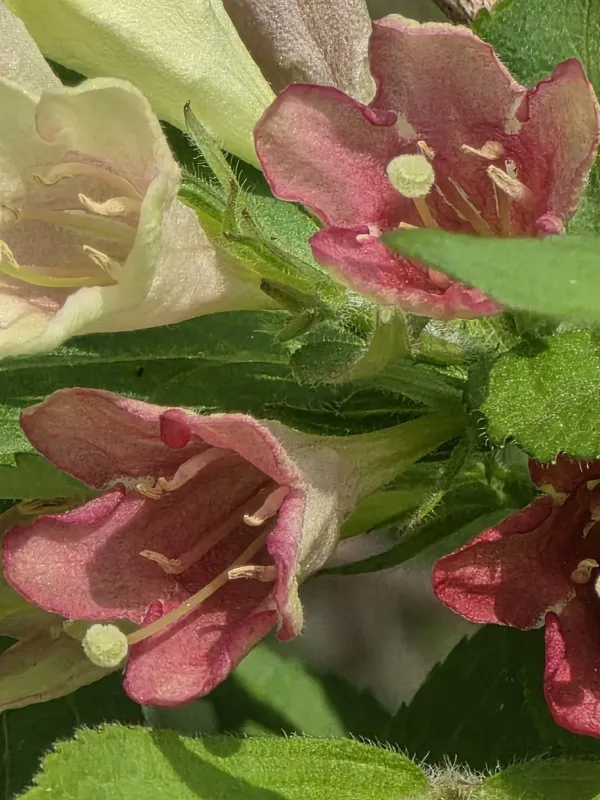
Description
Growing requirements
Weigela subsessilis is a notable deciduous ornamental shrub belonging to the Caprifoliaceae family. Native to the mountainous regions of Korea and Japan, this species is well-regarded in landscape design for its unique foliage and elegant floral displays.
Botanically, the species is defined by its sessile leaves, which lack a distinct petiole and appear directly attached to the stem. The shrub typically reaches a moderate height, exhibiting a graceful, arching habit that makes it an excellent choice for ornamental borders.
Optimal growth requires a sunny to partially shaded position with fertile, well-draining soil. It thrives in locations where it can access consistent moisture, making it particularly suitable for environments with regular rainfall or controlled irrigation.
Cultivation practices should focus on maintaining soil structure through the application of organic matter. During the growing season, consistent moisture levels are crucial, especially as the plant prepares for its spring or early summer bloom cycle.
Pruning is an essential aspect of shrub management for this species. Removing one-third of the oldest stems after flowering encourages vigorous new growth, ensuring that the plant remains compact and healthy throughout the following season.
Main diseases and pests
While relatively robust, Weigela subsessilis can be susceptible to powdery mildew during periods of high humidity and poor air circulation. Proper plant spacing is essential to minimize the spread of fungal spores between neighboring shrubs.
Aphids and spider mites are the most common pests encountered in the field. These insects can cause significant chlorosis and deformation of leaves, requiring timely intervention with insecticidal soaps or horticultural oils.
Root rot, driven by waterlogged soil conditions, poses the most severe threat to the plant's health. Ensuring that the planting site has a proper drainage layer of gravel or sand is a critical step during the initial installation phase.
Leaf spot diseases may appear during wet springs, manifesting as discolored lesions on the foliage. While usually non-lethal, early identification and removal of infected leaves help prevent larger outbreaks across the nursery or garden area.
Winter damage is a localized concern in colder climates. Applying a thick layer of mulch around the base provides necessary thermal protection for the root system, helping the plant recover more efficiently when the growing season begins.