
Weigela middendorffiana
Weigela middendorffiana (Carrière) K. Koch
Description
Growing requirements
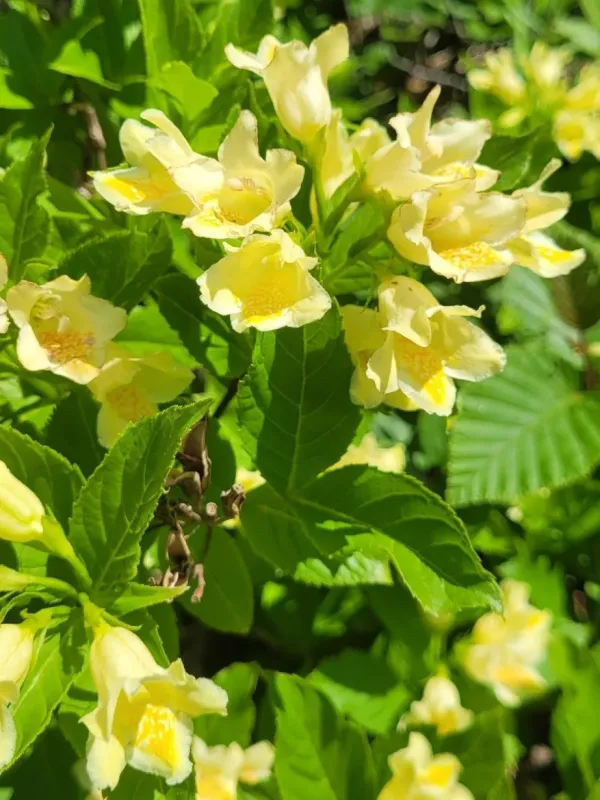
Weigela middendorffiana is a distinguished deciduous shrub belonging to the Caprifoliaceae family. Native to the mountainous and forest regions of Northeast Asia, this plant is renowned for its hardiness and elegant, trumpet-shaped flowers, which often exhibit unique yellow or creamy hues.
Optimal growth requires well-drained, nutrient-rich soil with a slightly acidic to neutral pH. It is crucial to ensure that the planting site has excellent drainage, as the roots are sensitive to waterlogging, which can easily lead to root rot in heavier soil types.
The ideal location should offer full sun exposure to semi-shade conditions. While the shrub can tolerate partial shadow, excessive shade will significantly reduce the density of blooms and may lead to sparse foliage, diminishing its overall ornamental value in the landscape.
Cultural practices include consistent irrigation, especially during the first few years after planting or during prolonged summer dry spells. Applying organic mulch around the base of the plant helps maintain soil moisture, suppresses weeds, and protects the root system from temperature extremes.
Pruning is essential for maintaining the plant's structural integrity and aesthetic appeal. It is recommended to perform light pruning immediately after the main flowering period, removing spent flower heads and thinning out old or crowded branches to promote healthy new growth.
Main diseases and pests
Although Weigela middendorffiana is generally robust, it may face challenges from fungal pathogens, particularly in humid and stagnant environments. Leaf spot and grey mould are common issues that typically require prompt identification and treatment with appropriate fungicides.
Pests like aphids and spider mites are occasional intruders that can damage tender young shoots. Regular monitoring of the foliage is advised, and infestations can usually be managed with insecticidal soaps or systemic treatments if the damage becomes significant.
Root system damage caused by improper cultivation practices, such as deep tilling too close to the base, can stress the plant and make it more susceptible to opportunistic soil-borne infections. Always favor light mulching over mechanical soil disturbance.
Winter damage is rarely a concern due to the plant's high cold tolerance, but extreme wind exposure can dry out branches. Protecting the shrub from prevailing harsh winter winds can prevent tissue damage and ensure a stronger start in the spring.
The best strategy for long-term health is prevention through good garden hygiene. Clearing fallen debris from around the plant base and ensuring adequate airflow between neighboring shrubs significantly lowers the risk of pest and disease outbreaks.