
Transalpine scabious
Knautia transalpina
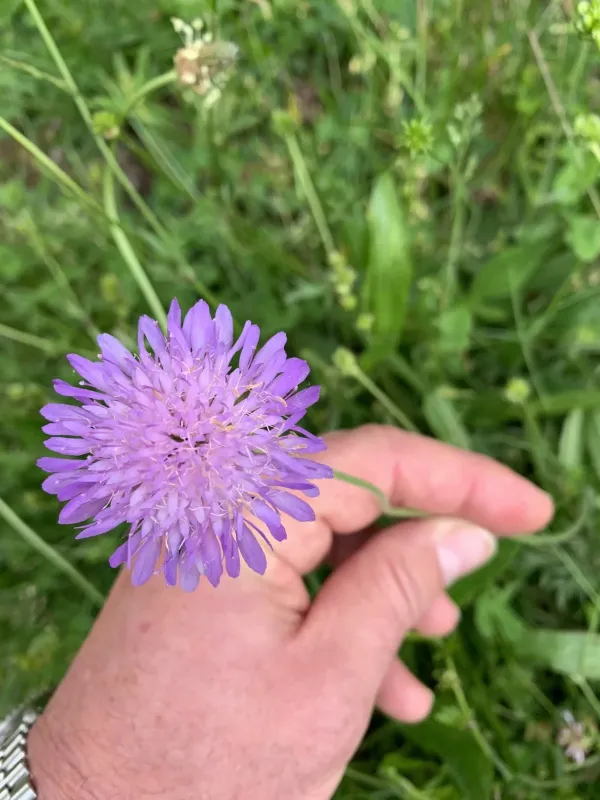
Description
Sowing dates
Sowing seeds of Transalpine scabious is best performed in autumn, as the seeds require natural stratification to germinate successfully in the spring. Early spring sowing is possible; however, germination rates may be lower due to the absence of a cold dormancy period.
To establish a healthy stand, seeds should be sown at a depth of no more than 1–2 cm, as they require light to germinate. It is recommended to lightly compact the soil after sowing to ensure optimal seed-to-soil contact.
The optimal seeding rate is approximately 8–10 kg per hectare, provided that high-quality seed material is used. When creating mixed stands with legumes or grasses, the seed rate of scabious should be adjusted downward.
Proper soil preparation is crucial; the site must be thoroughly cleared of perennial rhizomatous weeds. The crop is sensitive to competition in the early stages, making quality seedbed preparation the key to successful crop establishment.
After emergence, it is necessary to maintain moderate soil moisture, avoiding the drying out of the top layer. In the first year, the plant develops slowly, forming a rosette of leaves and a robust root system, and rarely produces a full harvest of green mass.
Growing requirements
Transalpine scabious is a perennial herbaceous plant belonging to the Caprifoliaceae family. Its natural range covers mountainous and sub-mountainous regions of Europe, where it has adapted to moderately humid climates and cool growing conditions.
The crop prefers well-drained, fertile loamy or sandy soils with a neutral or slightly alkaline pH. The plant does not tolerate waterlogging, so the selection of the plot should exclude areas with high groundwater levels.
For normal development, Transalpine scabious requires sufficient sunlight, although it can tolerate light shade. Under intensive agricultural conditions, the plant responds well to phosphorus-potassium fertilizers, which strengthen its immunity and improve winter hardiness.
The plant possesses a deep root system, making it resistant to short-term drought periods in the second half of summer. It exhibits excellent winter hardiness, allowing it to be grown in regions with harsh winters, provided there is adequate snow cover.
In agricultural use, Transalpine scabious is valued as a honey plant and a component of hay meadows. It enriches the species composition of meadows, improves soil structure, and serves as an important resource for supporting pollinator biodiversity in field environments.
Main diseases and pests
Typical diseases for this crop include powdery mildew, which affects leaves under high humidity and poor ventilation. Preventive measures include ensuring good air circulation and avoiding excessively dense planting.
Rust infection is possible, characterized by pustules on the leaf blades. If initial signs are detected, systemic fungicides approved for use on ornamental and forage crops should be applied according to the manufacturer’s instructions.
Among pests, leaf-eating insects and aphids pose the greatest threat, as they can significantly reduce the overall vegetative mass. Monitoring pest populations should be conducted regularly starting from early spring during the active growth phase.
Root rot may occur if agricultural practices are neglected, particularly in conditions of systematic waterlogging. Preventing this disease relies on strict adherence to crop rotation and improving the drainage characteristics of the site.
Slugs and snails can damage young shoots at the beginning of the growing season. For protecting small plots, the use of mechanical barriers or environmentally safe molluscicides is effective.