
Tree honeysuckle
Lonicera arborea
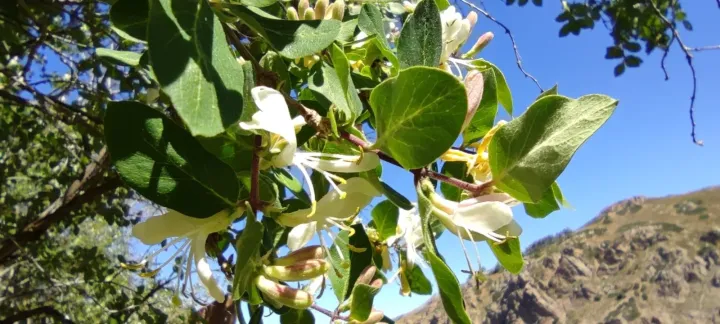
Description
Growing requirements
Tree honeysuckle (Lonicera arborea) is a deciduous woody species belonging to the Caprifoliaceae family. It is recognized for its unique growth habit, often resembling a small tree or a robust, upright shrub, originating from the mountainous regions of Central Asia and parts of China.
This species is highly valued for its extreme environmental adaptability. It thrives in regions with significant temperature fluctuations, demonstrating remarkable resilience against both arid summer conditions and freezing winter temperatures.
In terms of cultivation, Lonicera arborea prefers sunny to semi-shaded locations with well-drained, slightly alkaline, or neutral soil. Soil aeration is essential for the healthy development of its root system, as it cannot tolerate waterlogged conditions which often lead to root rot.
The agronomic maintenance of this plant includes periodic light pruning to maintain its tree-like structure and stimulate new growth. Mulching the base is recommended to regulate soil temperature and moisture levels, which supports a consistent growth rate throughout the growing season.
Its primary use is in ornamental landscaping, where it serves as a sophisticated element for garden design. Whether used as a standalone specimen or part of a mixed hedge, its aesthetic value is enhanced by its ability to maintain structural integrity with minimal maintenance effort.
Main diseases and pests
Like many members of the honeysuckle family, Lonicera arborea can be susceptible to powdery mildew. This fungal issue generally manifests when atmospheric humidity is high and airflow within the shrub's canopy is restricted, leading to leaf discoloration and stunted development.
Insect pests such as aphids and honeysuckle leaf-miners represent the most significant biotic threats. These pests typically congregate on the tender young foliage, significantly impacting the plant's aesthetic quality and photosynthetic capacity if left unchecked.
Integrated pest management strategies are recommended, focusing on early identification and targeted interventions. Applying biological controls or environmentally friendly soaps often proves sufficient for minor infestations without disrupting the local garden ecosystem.
Sanitation is a critical component of disease prevention. Removing and disposing of fallen foliage during the autumn helps to break the life cycle of many pathogens and overwintering pests that thrive in decaying organic matter around the base of the plant.
Regular monitoring of the bark and branches is also advisable to identify potential infestations of scale insects. Prompt identification and localized treatment can prevent the spread of these pests to larger portions of the plant, ensuring long-term health and vitality.