
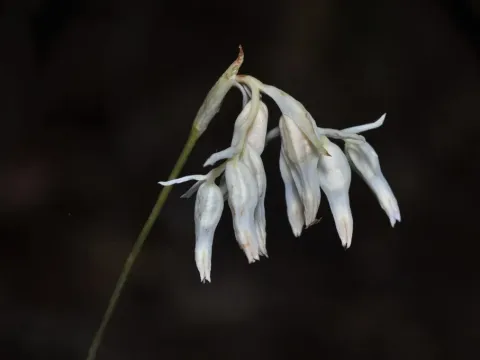
Burmannia
Burmannia
The genus Burmannia belongs to the family Burmanniaceae. These monocotyledonous herbaceous plants are primarily myco-heterotrophs, obtaining nutrients through symbiosis with fungi, as they lack chlorophyll or contain it in negligible amounts.
What the section contains


Burmannia
The natural range of these plants spans tropical and subtropical regions across the globe. The highest species diversity is found in Southeast Asia, Africa, Central and South America, as well as Australia.
The plants thrive in moist, shaded environments such as swampy areas, tropical forests, or near water bodies. High atmospheric and soil moisture is critical for their survival, alongside the presence of specific fungal networks within the substrate.
Botanically, Burmannia is characterized by small, often brightly colored, tubular flowers that feature distinct winged outgrowths on the perianth. In most species, the leaves are heavily reduced and resemble small scales.
Given their unique biological traits, these plants are not recognized as agricultural crops. Instead, they represent significant scientific value for researchers studying the evolution of myco-heterotrophy and the preservation of biological diversity in tropical ecosystems.
The primary threat to members of this genus is the destruction of their natural habitat, particularly the drainage of swampy forests and the degradation of soil mycorrhizal connections.
Due to their narrow ecological niche, these plants are extremely sensitive to human impact and shifts in the chemical composition of their environment, making them reliable indicators of ecosystem health.