
Burmannia bicolor
Burmannia bicolor
Description
Growing requirements
Burmannia bicolor is a unique botanical species belonging to the Burmanniaceae family. It is recognized as a mycoheterotroph, a plant that gains its energy by interacting with fungi rather than relying primarily on photosynthesis for carbon acquisition.
The plant is native to tropical and subtropical regions of the Americas. Its geographical range is tied to specific environments such as wet savannas and sandy depressions, where high humidity and specific soil microbiota are available to support its complex life cycle.
Regarding soil requirements, this species thrives in highly acidic, nutrient-poor substrates. It is extremely sensitive to chemical fertilization, which can disrupt the delicate mycorrhizal networks required for the plant's survival and nutrient uptake process.
Environmental conditions must include consistent warmth and high humidity levels. The plant is rarely cultivated due to the extreme difficulty in replicating its specialized natural habitat, which requires precise control over water tables and specific fungal populations.
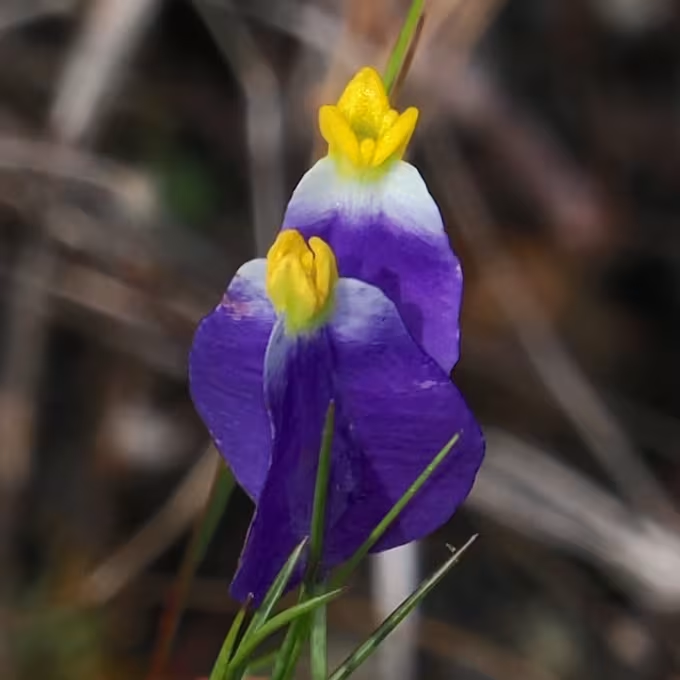
Botanically, Burmannia bicolor exhibits a delicate, upright growth habit. Its floral structure is distinctive, often featuring blue or purple hues contrasted with white, providing the inspiration for its common name. The plant remains relatively small compared to surrounding vegetation in its native ecosystem.
Main diseases and pests
The primary threat to the species is habitat destruction, particularly the drainage of wetlands and savannas. Because the plant is dependent on a narrow ecological niche, any significant alteration to soil acidity or water availability leads to the rapid decline of local populations.