
Burmannia championii
Burmannia championii
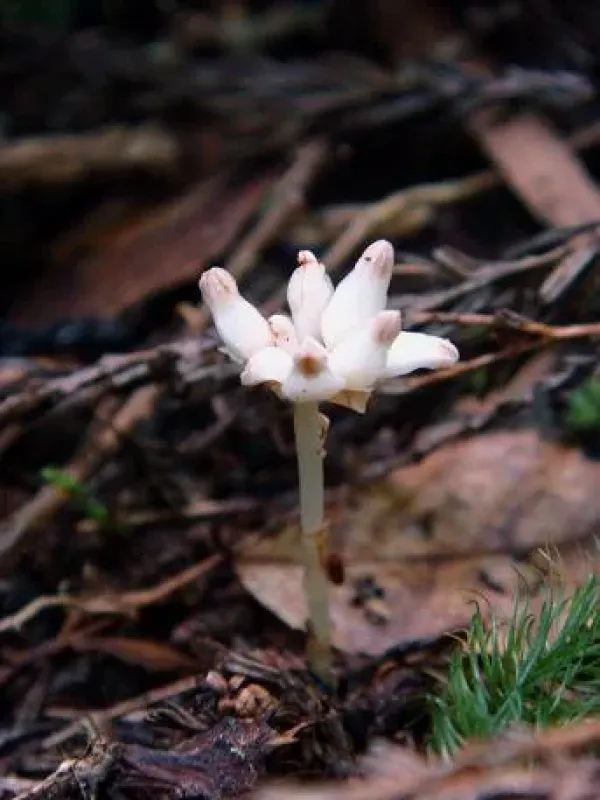
Description
Growing requirements
Burmannia championii is a fascinating botanical species belonging to the Burmanniaceae family. It is classified as a myco-heterotroph, which means it lacks chlorophyll and cannot perform photosynthesis, instead deriving all its energy from symbiotic fungi found in the soil.
The plant originates from the tropical and subtropical regions of Asia, primarily found in countries like China, Japan, and parts of Southeast Asia. It requires specific forest environments where the soil is rich in organic matter and host fungi are abundant for its survival.
Given its highly specialized mode of nutrition, Burmannia championii has no agricultural application in the traditional sense. It cannot be cultivated in standard fields because its growth depends entirely on a stable subterranean network of mycorrhizal fungi that are difficult to replicate in artificial environments.
Botanically, the species is characterized by its slender, often translucent appearance due to the lack of pigments. Its flower morphology is delicate, designed for specific pollinators within its natural habitat, making the plant very sensitive to even minor changes in its microclimate.
Scientific interest in Burmannia championii remains strictly academic, focusing on plant-fungi symbioses and conservation biology. There are no harvesting protocols, commercial uses, or agricultural practices associated with this species, as it is strictly a wild organism essential to its ecosystem.