
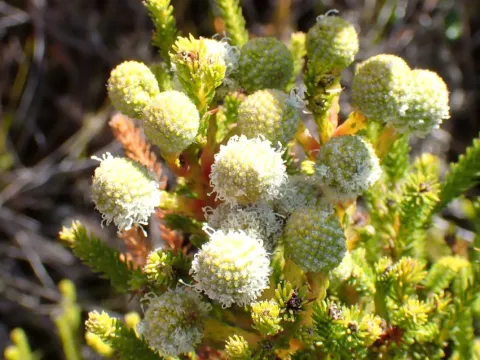
Berzelia
Berzelia Brongn.
Berzelia seeds are typically sown in late winter or early spring using a light, sandy-peat substrate to ensure optimal drainage conditions.
What the section contains

Berzelia
A crucial step for successful germination is seed stratification, which mimics natural environmental cycles and significantly boosts the germination rate of this demanding crop.
The temperature during the germination period should be maintained between 18 and 22 degrees Celsius, while avoiding excessive moisture in the seed trays.
Seedlings should be transplanted into individual pots with an effective drainage layer once they reach the stage of forming their second pair of true leaves.
Transferring young plants to open ground or greenhouses should only occur once stable warm weather is established and the threat of late spring frosts has passed.
Berzelia belongs to the Bruniaceae family and is native to the Cape region of South Africa, where it thrives in sunny and open environments.
The plant has specific soil requirements, preferring slightly acidic, well-aerated soil with low phosphorus levels, to which it is extremely sensitive.
Effective drainage is critical for the healthy development of this crop, as standing water near the roots leads to rapid development of root rot and plant death.
The ideal climate for Berzelia features a Mediterranean pattern with mild, moist winters and dry, warm summers, which must be replicated in cultivation.
In regions with harsh winters, Berzelia must be grown in containers, allowing the plants to be moved to bright, cool indoor locations during cold spells.
Berzelia is primarily valued in ornamental floristry for its unique, globular flower heads that resemble small, vibrant green pinecones.
Harvesting for floral use is carried out at the peak of maturity, when the heads become firm and the color reaches its maximum intensity.
Cut stems are renowned for their exceptional vase life, making them a preferred choice for florists creating textured arrangements and complex bouquets.
Immediately after harvest, stems should be placed in water containing specialized preservatives to prevent the wilting of foliage and ensure long-term freshness.
Commercial utilization also involves drying the stems to create high-quality everlasting flowers that retain their decorative appeal in interior design.
The primary pests affecting Berzelia are spider mites, which proliferate rapidly in low-humidity conditions, particularly within greenhouses or indoor environments.
Root rot caused by Phytophthora fungi poses the greatest threat when irrigation practices are poor or when planting in heavy, clay-based soils that retain too much water.
Micronutrient deficiencies in the soil can result in leaf chlorosis, a condition that is often misidentified as a fungal disease requiring chemical treatment.
Powdery mildew may occur if ventilation is inadequate and humidity remains high, requiring immediate removal of affected parts and improved air circulation.
Disease prevention relies on rigorous irrigation control, maintaining excellent airflow, and using sterile substrates during the propagation and growing phases.