
Tower mustard
Turritis glabra
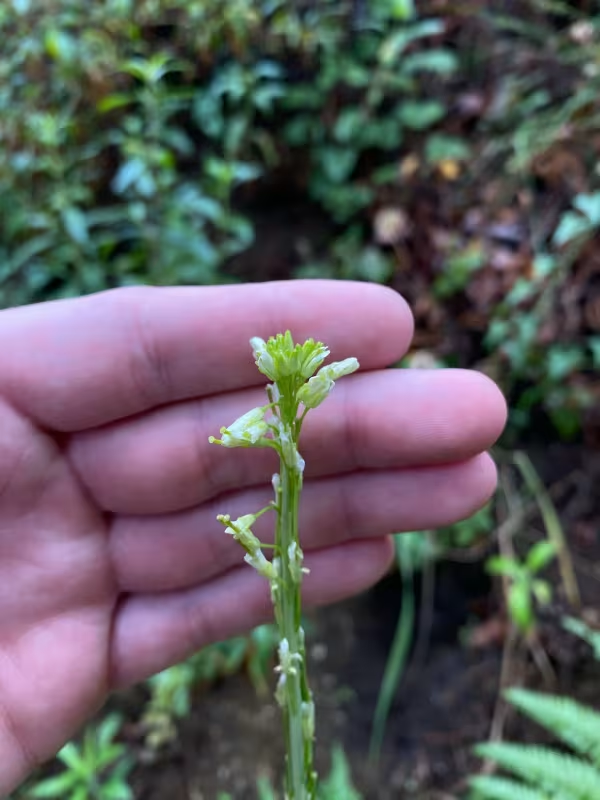
Description
Sowing dates
Tower mustard (Turritis glabra) is a biennial herb, which dictates the timing of sowing depending on whether the primary goal is seed production or biomass. In temperate climates, sowing is best performed in early spring as soon as the soil reaches a temperature of 5–8 degrees Celsius.
Winter sowing is also a viable strategy, as the seeds undergo natural stratification, leading to earlier and more uniform emergence during the spring season. The seeds should be sown at a depth of 1–2 centimeters, given their small size and specific germination requirements.
Seeding rates must be calculated to achieve an optimal plant density, preventing excessive inter-plant competition. Recommended inter-row spacing is between 20 and 30 centimeters, which allows for efficient field maintenance and weed control throughout the growth cycle.
After seeding, rolling the field is strongly recommended to improve soil-to-seed contact and capillary moisture movement. In arid regions, supplemental irrigation is necessary until the plants reach the rosette stage to ensure successful establishment.
A rigorous crop rotation schedule must be followed, as Turritis glabra should not return to the same plot for at least 4–5 years to minimize the accumulation of soil-borne pathogens common to the Brassicaceae family.
Growing requirements
This crop thrives in well-lit areas with light, fertile sandy or silty loam soils that possess good drainage properties. Waterlogged conditions are detrimental to the root system and must be avoided during site selection.
Tower mustard is noted for its winter hardiness and tolerance to early spring frosts, making it a suitable choice for regions with challenging weather conditions. However, consistent temperatures during the flowering phase are vital for successful pollination.
The optimal soil pH range for this crop is 6.0 to 7.0. On acidic soils, liming is a mandatory agronomic practice to neutralize aluminum toxicity and provide sufficient calcium, which is essential for healthy plant development.
Fertilization should prioritize phosphorus and potassium, as these nutrients strengthen the stems and improve seed ripening efficiency. Nitrogen applications should be moderate to avoid excessive vegetative growth that could lead to plant lodging.
Inter-row cultivation is highly beneficial for improving soil aeration and moisture retention. Proper maintenance of the soil surface prevents crusting, which can hinder plant growth and limit oxygen availability to the rhizosphere.
Yield
The yield potential of Tower mustard depends heavily on soil fertility and adherence to best management practices. It is primarily cultivated for its seeds, which contain high concentrations of lipids useful for technical and industrial applications.
Under favorable growing conditions and good management, seed yields can range from 10 to 15 decitonnes per hectare. Maximizing yield requires careful attention to the timing of the harvest to avoid the natural seed shattering that occurs in mature pods.
Harvesting should occur when seeds reach full physiological maturity and pods begin to dry out but before they become brittle. Proper timing is critical to minimize harvest losses and ensure the highest possible quality of the collected seed.
Post-harvest handling involves cleaning the grain and immediate drying to a moisture content of 8–10 percent for long-term storage. High moisture levels in stored seeds lead to rapid spoilage and quality degradation.
Beyond seed production, the biomass generated from this plant can be utilized in agricultural systems for soil improvement or as a source of organic fiber in specific industrial settings, depending on the harvest stage.
Main diseases and pests
As a member of the Brassicaceae family, Tower mustard shares a pest and disease profile with crops such as rapeseed and mustard. Flea beetles are among the most significant threats, particularly to young seedlings during the early growth phase.
High humidity and cool weather conditions promote fungal diseases like Alternaria leaf spot and downy mildew. Proactive monitoring and the application of fungicides are necessary to protect the plant canopy from premature tissue damage.
The pollen beetle (rapeseed beetle) is a major pest during the budding phase, as it damages the reproductive organs and significantly reduces total seed output. Insecticide treatment is warranted when population densities exceed economic thresholds.
Clubroot is another potential threat, especially in heavy or poorly drained soils. Preventing this disease relies primarily on non-host crop rotation and maintaining proper soil moisture levels to create an environment unfavorable for the pathogen.
- Flea beetles
- Pollen beetles
- Alternaria blight
- Clubroot
- Stem weevils