
Wallflower
Cheiranthus
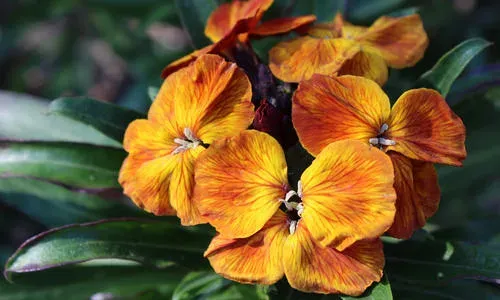
Description
Sowing dates
The Wallflower (Cheiranthus), belonging to the Brassicaceae family, is a popular ornamental crop that requires precise timing for successful development and blooming.
Seeds are typically sown indoors in March or April to produce transplants, or directly into the open ground in late May once the frost risk has fully passed.
As light is required for germination, seeds should be sown shallowly, usually no deeper than 0.5–1 cm, and kept in a warm environment until emergence.
For biennial cultivation, gardeners often sow seeds during the summer months, specifically June or July, allowing the plant to establish a robust root system before winter.
When thinning or transplanting seedlings, it is vital to maintain a spacing of 20–30 cm between individual plants to prevent disease outbreaks and promote healthy growth.
Growing requirements
Wallflowers thrive in full sun conditions, which is crucial for maintaining a compact habit and maximizing the abundance of their fragrant flowers.
The ideal soil for this crop is well-drained, fertile, and slightly alkaline; it cannot tolerate heavy or waterlogged soil, which leads to immediate root decay.
In terms of irrigation, these plants are relatively drought-tolerant once established but require consistent moisture during the initial growth phase and bud formation.
To avoid nitrogen toxicity and excess foliage growth, fertilizers used should focus on phosphorus and potassium levels, which support long-lasting flower displays.
Maintaining proper soil aeration is critical, so gardeners are advised to avoid compacting the soil and to incorporate organic matter or grit if drainage is poor.
Main diseases and pests
The primary concern for all Brassicaceae, including Cheiranthus, is clubroot, a soil-borne disease that severely limits the growth of the root system.
Flea beetles represent a constant threat, often causing severe leaf damage to young seedlings, which can significantly stunt the crop's development.
High humidity levels and lack of ventilation can trigger outbreaks of powdery mildew and leaf spots, which compromise the plant's appearance and vitality.
Integrated pest management, including the use of targeted insecticides and fungicide applications during humid spells, is essential for professional crop maintenance.
Strict adherence to crop rotation, avoiding locations where cruciferous plants were previously grown, is the most effective preventative measure against soil pathogens.