
Macrotomia densiflora
Macrotomia densiflora
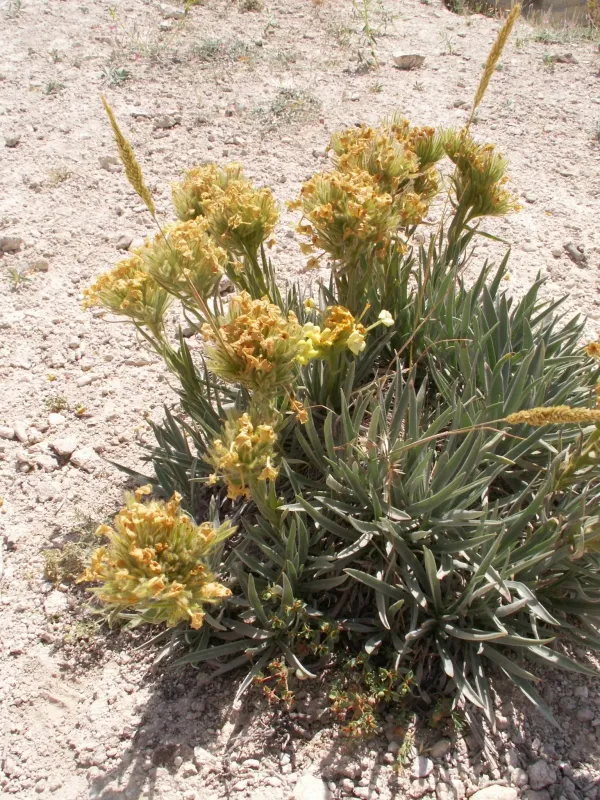
Description
Sowing dates
Macrotomia densiflora is a perennial herbaceous plant, so sowing is typically scheduled for spring when soil temperatures reach 10-12 degrees Celsius.
For successful germination, the seeds require stratification, which can be performed in natural winter conditions or artificially at lower temperatures.
The sowing depth in light substrates should not exceed 1-2 centimeters to ensure easy emergence of seedlings from small seeds.
Planting is carried out in rows, maintaining sufficient space between individual plants, as the crop tends to expand its root system significantly.
Seedlings emerge unevenly, making it essential to keep the field weed-free, as weeds can easily suppress the development of young Macrotomia plants.
Growing requirements
Belonging to the Boraginaceae family, the plant naturally prefers rocky slopes and well-drained habitats in the wild.
The crop is highly light-demanding and must be grown in open, sunny locations without any shading from other crops or structures.
Soils must be light, preferably sandy or stony, with a neutral or slightly alkaline pH level to prevent root rotting.
Macrotomia densiflora is quite drought-tolerant, but it requires moderate watering during the active growth phase to ensure proper root development.
Excessive moisture and water stagnation are fatal to this species, making the implementation of a proper drainage layer mandatory for cultivation.
Yield
The economic value of the plant lies in its root system, which contains valuable pigments such as alkannin and shikonin.
The yield of dried root mass heavily depends on the age of the plant, as the accumulation of biologically active compounds takes several years.
The optimal age for harvesting raw materials is three years or older, when the root reaches sufficient thickness and marketable weight.
Biological productivity is limited by environmental conditions, meaning that industrial-scale yields are generally moderate.
The quality of the yield is determined by the concentration of coloring pigments, which are widely used in the food, cosmetic, and pharmaceutical sectors.
Main diseases and pests
The main threat to Macrotomia is fungal root disease, which is often triggered by soil waterlogging and poor drainage.
Under conditions of high air humidity, the plant may become susceptible to powdery mildew, requiring preventive fungicide applications.
Pests such as aphids or spider mites can damage the aerial parts of the plant during dry spells, reducing the overall photosynthetic capacity.
A crucial agronomic measure is the prevention of root rot by maintaining a strict irrigation schedule and using pathogen-free planting material.
Weed management is a critical factor, as the slow initial growth of Macrotomia makes it highly vulnerable to competition for light and soil nutrients.
Harvesting
Harvesting of Macrotomia densiflora roots is carried out in autumn after the vegetation period ends, when the concentration of active substances is at its peak.
Roots are carefully lifted from the soil using specialized equipment to avoid damaging the taproot, where the coloring agents are concentrated.
After excavation, the raw material is thoroughly cleaned of soil particles, washed with running water, and subjected to rapid controlled drying.
Drying is performed in ventilated rooms or commercial dryers at temperatures not exceeding 45 degrees Celsius to prevent the degradation of active compounds.
Properly dried raw material should have a uniform color and a specific scent, indicating that the plant's valuable characteristics have been preserved.