
Common gromwell
Lithospermum officinale L.
Description
Sowing dates
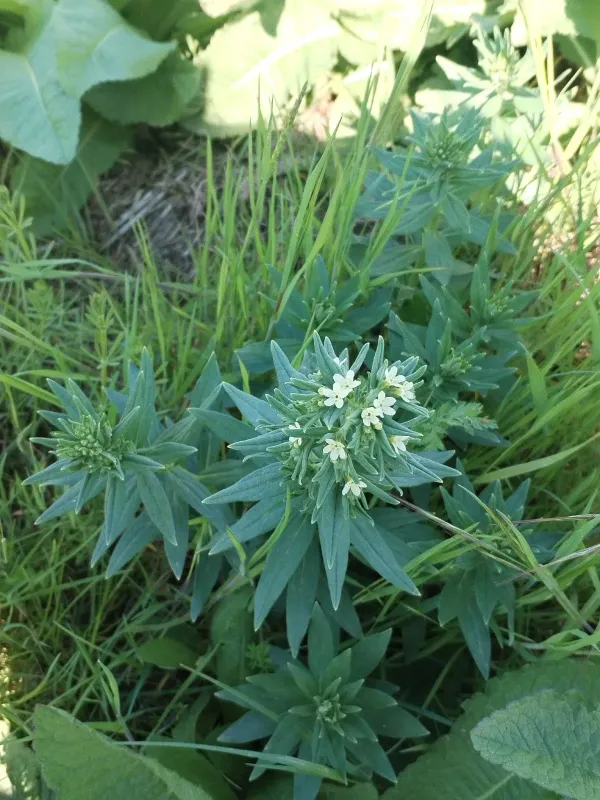
Common gromwell (Lithospermum officinale L.) is a perennial herbaceous plant belonging to the Boraginaceae family. Successful cultivation begins with understanding the seed requirements, as they typically require a period of cold stratification to break dormancy and ensure uniform germination.
The most effective sowing period is late autumn, allowing the seeds to undergo natural winter chilling. For spring planting, seeds must be artificially stratified for several weeks at low positive temperatures before being placed into the soil.
Seeds should be sown at a depth of 1.5–2 cm in well-prepared, loose soil. Maintaining proper soil moisture immediately after sowing is essential to support the initial root development of the seedlings.
Row spacing is typically set between 45 and 60 cm to allow for mechanical weeding and to ensure that plants receive adequate sunlight and air circulation as they mature. Proper spacing also helps reduce the risk of humidity-related diseases.
As a perennial crop, gromwell develops a strong root system over its first year of life. Maintaining clean rows free from competitive weeds is the most labor-intensive part of the cultivation process during the establishment phase.
Growing requirements
Common gromwell thrives in well-drained, lime-rich soils. It is particularly well-suited to loamy or sandy soils that do not retain excess water, as the plant is susceptible to root rot if subjected to waterlogging.
The plant requires full sun for optimal development and secondary metabolite accumulation. While it can tolerate partial shade, productivity is highest in locations that receive consistent solar exposure throughout the day.
Once established, the crop demonstrates significant drought tolerance due to its deep taproot. However, irrigation may be beneficial during prolonged dry spells to maintain leaf quality and ensure robust flowering.
The optimal soil reaction is neutral to slightly alkaline. Growers should perform a soil test before planting to ensure that the pH levels are suitable, as highly acidic soils may hinder the plant's nutrient uptake.
Winter hardiness is generally sufficient for temperate climates. In areas with extremely low temperatures and little snow cover, applying organic mulch can provide the necessary protection for the dormant roots.
Main diseases and pests
Fungal diseases such as powdery mildew are the most common issues, particularly when planting density is too high, leading to stagnant air. Improving ventilation through thinning is a primary cultural control method.
Root rot caused by excessive moisture is a critical threat to the longevity of the plantation. Selecting fields with excellent natural drainage and avoiding heavy, clay-based soils is essential to prevent this pathology.
Pests such as aphids can cause damage during the active growing season. Regular scouting of the apical buds and undersides of leaves is necessary to catch infestations early and manage them with appropriate treatments.
Seed-feeding insects can reduce the yield of botanical raw materials. Integrated pest management (IPM) strategies, including biological controls, are recommended to protect the floral parts of the plant during the maturation phase.
Crop rotation is vital to prevent the build-up of soil-borne pathogens. A minimum interval of 3–4 years is recommended before replanting in the same location to maintain soil health and suppress disease pressures.