
Pride of Madeira
Echium candicans L. f.
Description
Growing requirements
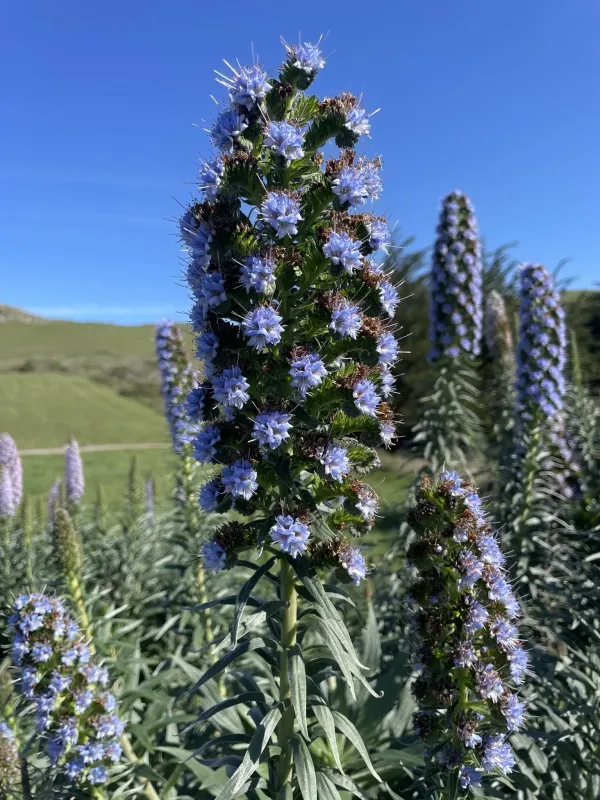
Pride of Madeira (Echium candicans) is a robust perennial shrub belonging to the Boraginaceae family, native to the island of Madeira. It is highly valued for its dramatic, large conical spikes of blue-purple flowers that appear in spring and summer.
The plant thrives in full sun and requires well-drained soil to prevent root rot, which is its primary vulnerability. It is exceptionally well-adapted to coastal conditions, demonstrating high tolerance to salt spray and wind, making it an excellent choice for seaside landscaping.
Regarding soil, it prefers sandy or gritty substrates that mimic its natural rocky environment. While it can handle poor soil conditions, ensuring that the ground does not retain excess water is more important than nutrient enrichment for this species.
Climate requirements are strictly Mediterranean; the plant is not frost-hardy and will suffer significant damage or mortality if exposed to prolonged freezing temperatures. In cooler regions, it must be grown in containers and brought indoors during winter months.
Beyond its aesthetic appeal in large garden borders, the species serves as a significant nectar source for pollinators. Its ability to attract butterflies and bees makes it a beneficial addition to ecologically focused gardens.
Main diseases and pests
The primary threats to this plant are fungal pathogens related to humidity and moisture management. Root and crown rot are common consequences of poorly drained soils, especially during the wetter months of the year.
Insect pests such as aphids can colonize the developing flower spikes, causing stunted growth and poor bloom quality. Additionally, spider mites may become problematic during periods of hot, dry weather if the plant is under stress.
Preventative care is centered on proper spacing to ensure adequate airflow, which significantly reduces the risk of fungal proliferation. Pruning away old or diseased foliage helps maintain the health and vigor of the entire shrub.
Chemical control should be approached with caution due to the plant's role as a major bee-attracting species. Integrated pest management strategies, such as using horticultural soaps for aphid control, are preferred over broad-spectrum pesticides.
Monitoring for signs of distress, such as wilting despite adequate soil moisture, can help identify root issues early. Maintaining proper cultural practices is the most effective way to ensure longevity and resilience against common threats.