
Italian viper's-bugloss
Echium italicum L.
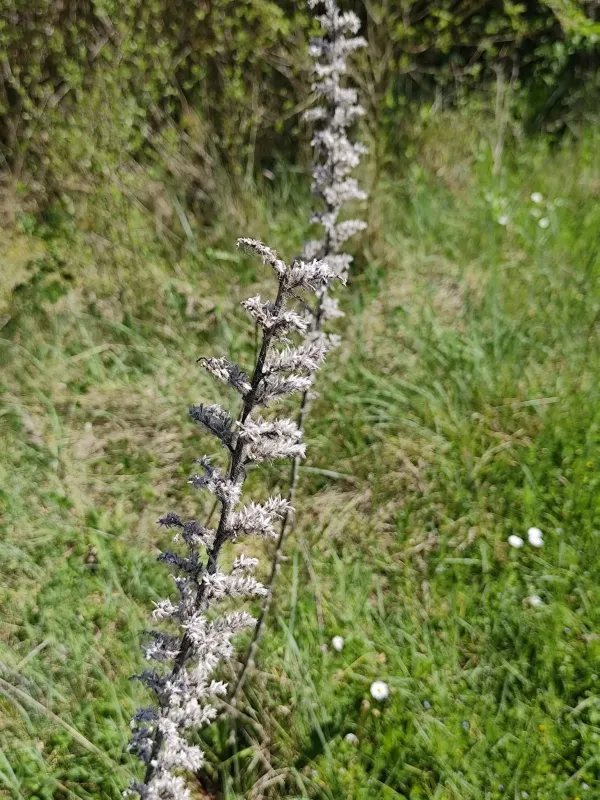
Description
Sowing dates
Italian viper's-bugloss (Echium italicum) is a biennial herbaceous plant belonging to the Boraginaceae family. Sowing is recommended in early spring, as soon as the soil warms up to 8–10 degrees Celsius, which ensures uniform germination of the seeds.
The seeds of this crop have a high density, requiring proper soil preparation before planting. Seeds should be sown at a depth of 1–2 centimeters, ensuring optimal contact with the moist soil substrate for better emergence rates.
Late autumn sowing is also a viable option in temperate climates. During the winter, the seeds undergo natural stratification, which promotes earlier germination in the spring and allows the plant to develop a strong basal rosette during its first year of growth.
The seeding rate should be adjusted based on the purity of the material and the chosen planting method. The row-crop method is generally preferred, with row spacings of 45–60 centimeters, allowing for efficient mechanical weeding and maintenance.
Ensuring an even distribution of seeds across the field is crucial. Since the plant develops a deep taproot, overcrowding can lead to intense competition, which negatively impacts the development of flower spikes in the second year of growth.
Growing requirements
Italian viper's-bugloss is considered a hardy crop, well-adapted to arid conditions and poor soil quality. Its deep taproot system allows it to access moisture from lower soil horizons, providing high resistance to drought periods.
Optimal growth is achieved on well-drained, sunny sites with light soil textures, such as sandy loams or well-aerated black soils. Waterlogging is a significant risk factor, as it often leads to root rot and poor plant development.
The plant adapts successfully to various climatic zones, including steppe and forest-steppe regions. It thrives in calcareous and rocky soils, making it an excellent candidate for rehabilitating degraded lands where traditional crops struggle to perform.
Temperature requirements are moderate, with the plant showing high winter hardiness during its rosette phase. During the flowering period in the second year, the plant requires plenty of direct sunlight to maximize nectar production.
Agronomic management is minimal, as excessive nitrogen fertilization can stimulate vegetative growth at the expense of floral development. Base application of phosphorus and potassium fertilizers is usually sufficient to support the development of high-quality inflorescences.
Yield
The primary economic value of Italian viper's-bugloss lies in its high nectar production, making it a valuable honey plant during the summer season. A single hectare can provide a substantial amount of nectar, supporting local apiaries.
Seed yield depends on the activity of pollinators and favorable weather conditions during the flowering phase. With proper management, farmers can harvest several centners of seed material per hectare, which can be sold or reused for subsequent plantings.
The crop also acts as a phytomeliorant, improving the structure of impoverished soils. Its roots help stabilize slopes and prevent wind and water erosion, which is particularly beneficial in regions prone to land degradation.
In traditional medicine and the pharmaceutical industry, the aerial parts of the plant are utilized due to their alkaloid content and bioactive compounds. Biomass for such purposes is typically harvested during the peak flowering stage.
Economic efficiency is enhanced by integrating beekeeping with cultivation. This synergy allows landowners to generate revenue from both honey and seed production on land that might otherwise be considered marginal or unsuitable for intensive grain farming.
Main diseases and pests
While the plant is naturally resistant to many diseases, it can be susceptible to powdery mildew under conditions of high humidity and poor air circulation. Selecting well-ventilated areas for cultivation is the best preventive measure.
Pests such as weevils or certain species of aphids may damage young rosettes during the spring. Frequent field monitoring is necessary to detect infestations early and take targeted, localized actions to protect the plants.
Early-stage crops are vulnerable to weed competition, necessitating timely mechanical cultivation between rows. Once the canopy closes, the plant becomes highly competitive and effectively suppresses most encroaching weeds on its own.
The risk of root pathogen infection increases in heavy, waterlogged soils without proper drainage. These conditions can lead to root rot, potentially causing the loss of significant portions of the crop before the flowering stage is reached.
Biological pest control methods are preferred to minimize the impact on pollinating insects. Reducing chemical usage ensures that both the honey produced and the seed harvest remain environmentally safe and high in quality.
Harvesting
Harvesting seeds of Italian viper's-bugloss requires precision because the pods mature unevenly. The ideal harvest time occurs when the lower parts of the inflorescences turn brown and the seeds reach full hardness.
Direct combining at low speed is the recommended method for seed collection. This approach minimizes losses, as the seeds are prone to shattering if left on the plant too long after reaching full maturity.
Immediately after harvest, seeds must be cleaned and dried to a moisture content of no more than 12–14 percent. Proper storage in a cool, dry place preserves seed viability for several years.
Herbal material for medicinal purposes should be harvested at the beginning of the mass flowering phase, when the concentration of bioactive compounds is at its peak. The upper 30–40 centimeters of the stems are cut using mechanical mowers.
Drying the collected biomass is performed in well-ventilated sheds away from direct sunlight. High-quality raw material retains its natural color, which serves as an indicator that the biological integrity of the plant has been preserved.