
Anredera vesicaria
Anredera vesicaria
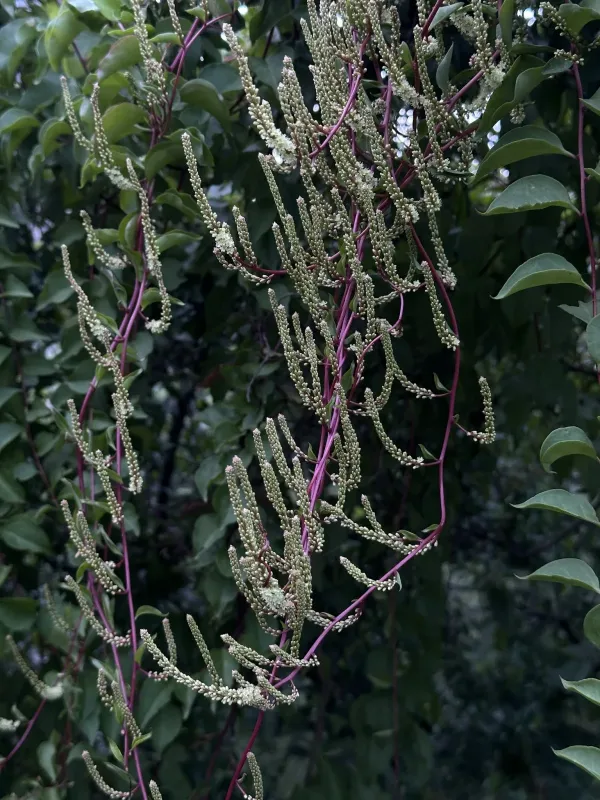
Description
Sowing dates
Anredera vesicaria is primarily propagated through its aerial tubers or root tubers. In temperate regions, planting occurs in spring once soil temperatures reach 15-18 degrees Celsius, ensuring that all risks of late frost have passed.
To accelerate growth, tubers should be pre-sprouted in a warm, well-lit environment. This practice provides the young vines with a head start, allowing them to establish a robust root system and reach support structures more quickly after being transplanted.
While seed propagation is possible, it requires starting indoors in late winter. Seeds need stable moisture and temperatures above 20 degrees Celsius to achieve reliable germination rates and healthy seedling development.
When planting in the field, a spacing of 40–50 centimeters between plants is essential. This distance ensures adequate access to nutrients and prevents overcrowding, which can hinder the plant's overall vigor and yield potential.
As a member of the Basellaceae family, this perennial vine is often treated as an annual in cold climates. The tubers must be harvested and stored indoors during the winter months to protect them from freezing temperatures.
Growing requirements
The plant thrives in sunny, sheltered locations but exhibits tolerance for partial shade. Exposure to sufficient sunlight is crucial for maximizing vegetative growth and the development of the characteristic tuberous mass.
Well-draining, fertile, and light soil is ideal for Anredera vesicaria. Sandy loams enriched with organic matter provide the best balance of drainage and nutrient availability, which are vital for sustained growth throughout the season.
Consistent but moderate moisture is necessary for success. The plant is prone to tuber rot if kept in waterlogged conditions, so irrigation should be carefully managed based on soil moisture levels and local evaporation rates.
Applying organic mulch around the base of the plant helps retain soil moisture and stabilizes temperature. Additionally, moderate fertilization with a balanced mix during the active growth phase promotes lush foliage and increases tuber production.
Temperature management is a key factor in cultivation. Anredera vesicaria is highly sensitive to cold, and any frost will destroy the aerial parts. The optimal growth occurs in temperatures ranging between 20 and 28 degrees Celsius.
Yield
The economic value of this crop lies in both its edible leaves and tubers. Young leaves serve as a nutritious leafy vegetable, often used in salads or cooked similarly to spinach, providing vitamins and essential minerals.
Tubers are highly regarded for their potential medicinal applications and culinary versatility. They serve as a starch source and are frequently incorporated into local diets for their health-promoting properties and distinct texture.
Vertical cultivation on trellises significantly enhances the yield potential. By keeping the vines off the ground, farmers reduce the incidence of rot, simplify harvesting, and optimize the use of sunlight across the leaf surface.
Tuber enlargement is most intense during the latter part of the growing season. A longer frost-free period significantly contributes to higher final yields, rewarding careful management and early planting strategies.
Regular harvesting of leaves does not significantly impact tuber development provided that only a portion of the foliage is removed. This allows for dual-purpose production, offering both edible greens and harvestable tubers from the same plant.
Main diseases and pests
Aphids and spider mites are the most common pests, particularly during hot and dry spells. Proactive monitoring and the use of integrated pest management strategies are recommended to keep populations below economic injury levels.
Fungal diseases, such as root rot and powdery mildew, often stem from poor drainage or excessive humidity. Ensuring good air circulation and strictly avoiding over-irrigation are the most effective preventative measures for these issues.
Nematodes can potentially affect the roots in infested soil. Implementing crop rotation and disinfecting planting areas can minimize these risks, ensuring a healthy environment for the developing tubers throughout the growing cycle.
Anredera vesicaria is generally hardy, provided that environmental requirements are met. Most phytosanitary issues are secondary, caused by improper cultural practices or unfavorable weather conditions that stress the plant's natural defenses.
In case of disease outbreaks, prompt removal and destruction of affected plant material are necessary to curb the spread of pathogens. Utilizing appropriate biological fungicides on early stages can protect the remaining crop yield.
Harvesting
The harvest of tubers begins in autumn when temperatures drop below 5 degrees Celsius. The vines are cut back, and tubers are carefully extracted from the soil, minimizing mechanical damage to ensure longer shelf life.
Post-harvest, tubers must be dried in a cool, ventilated area for several days. Proper curing is essential to remove excess moisture and prevent the development of rots that could otherwise destroy stored planting material.
Storage should occur in boxes filled with dry peat or sand at temperatures between 5 and 10 degrees Celsius. Maintaining darkness and low humidity prevents premature sprouting and keeps the tubers dormant until the next spring.
Leaf harvesting can be performed as needed throughout the season. Harvesting should be staggered to maintain the plant's photosynthetic capacity, which is essential for fueling the final growth spurt of the root and aerial tubers.
Sorting is the final step before storage, where diseased or damaged tubers are discarded to prevent cross-contamination. Storing only healthy, firm tubers ensures consistent quality and higher propagation rates for the following season.