
Basalt lady's mantle
Alchemilla basaltica
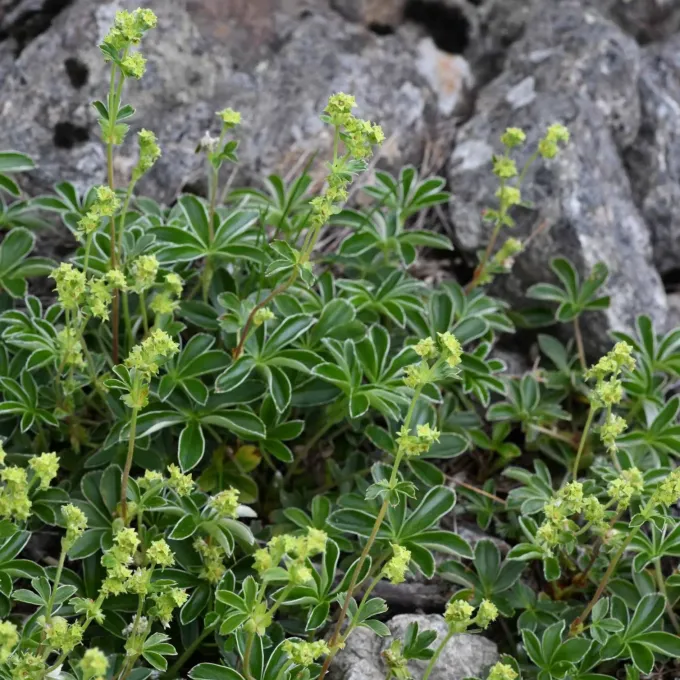
Description
Growing requirements
Basalt lady's mantle (Alchemilla basaltica) is a member of the Rosaceae family. This perennial herb is naturally adapted to rugged, rocky terrains and mineral-rich volcanic soils.
The plant thrives in well-drained soil conditions with moderate moisture levels. It demonstrates an excellent tolerance for temperature fluctuations, making it robust in diverse climates.
Botanically, it is defined by a basal rosette of rounded, serrated leaves with fine hairs, which help in moisture regulation, and clusters of inconspicuous yellow-green flowers.
In terms of cultivation, it requires minimal intervention but benefits from soils rich in minerals that mimic its natural basaltic habitat, ensuring proper development of its root system.
Economically, it is valued in horticulture as a ground cover and in herbal medicine for its potential bioactive compounds, being a resilient and low-maintenance option for land management.
Main diseases and pests
The most common disease impacting Alchemilla basaltica is powdery mildew, which often occurs if the plants are placed in areas with poor air circulation or excessive humidity.
Pest pressures primarily include mites and aphids that target the succulent foliage. Monitoring during the peak growing season is essential to prevent significant leaf damage.
Agricultural management should focus on maintaining a clean growing environment by removing dead plant debris, which can harbor fungal pathogens during the winter months.
Proper spacing between plants is critical to reduce the microclimate humidity that promotes the development of rusts or blights common to the Rosaceae family.
Integrated pest management strategies are recommended, utilizing biological controls before considering chemical interventions to preserve the quality of the harvested biomass.