
Bayonne milkvetch
Astragalus baionensis
Description
Growing requirements
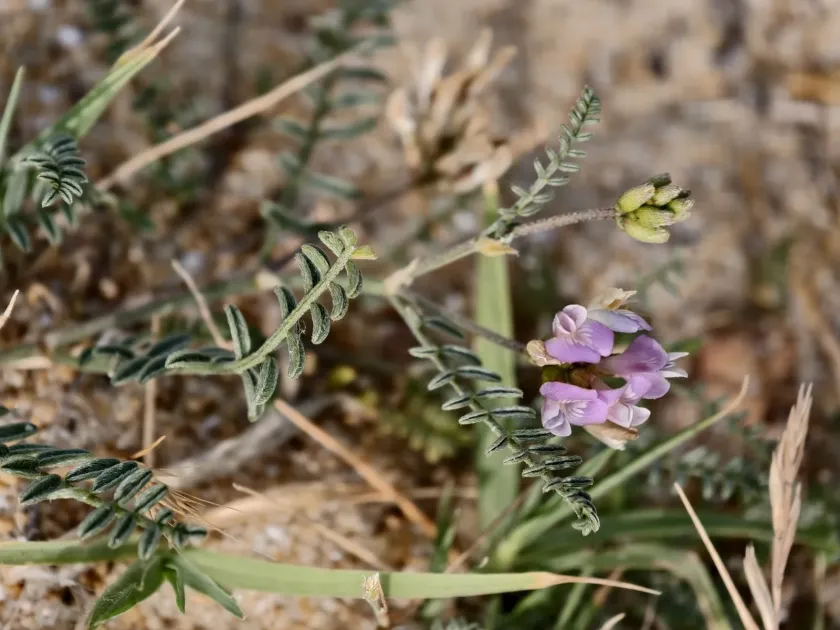
Bayonne milkvetch (Astragalus baionensis) is a perennial herbaceous plant belonging to the Fabaceae family. It is a specialized psammophyte adapted to survive in harsh environments, particularly in sandy dunes and coastal regions of southwestern Europe.
The plant thrives in well-drained, sandy soils that are nutrient-poor and possess a neutral to slightly alkaline pH. Its natural habitat is characterized by high solar radiation and low water retention, to which the plant has developed a profound resistance.
Its botanical structure includes compound leaves and raceme inflorescences typical of the milkvetch genus. A key biological advantage is its symbiotic relationship with nitrogen-fixing bacteria, allowing it to flourish in soils where other crops might struggle.
In agricultural practice, this plant is primarily valued for soil stabilization and erosion control. Its deep taproot system acts as an anchor in loose soil, making it a sustainable choice for restoring coastal or degraded sandy landscapes.
Climate requirements include ample sunlight and temperate conditions. It is extremely sensitive to waterlogging, as its roots require high oxygen levels to function efficiently. Therefore, site selection remains the most critical factor for successful establishment.
Main diseases and pests
The main threats to this crop include fungal pathogens such as root rot, which are exacerbated by high soil moisture levels. Maintaining a dry, well-aerated soil profile is the most effective cultural method to prevent these infections.
Insect pests, specifically weevils and aphids, may target the roots or developing flowers, potentially reducing biomass production and seed set. Regular monitoring during the spring growth phase is essential for timely intervention.
Weed control is vital during the establishment phase, as young plants are not highly competitive. Mechanical weeding or selective herbicides should be applied to prevent canopy suppression by more aggressive invasive weeds.
Poor drainage is the primary cause of plant death, as it encourages soil-borne pathogens. Preventing compaction and avoiding over-irrigation are key strategies to maintain plant health and population density.
Strategic use of biological control agents for pest management is recommended to avoid harming the plant's essential symbiotic microorganisms that facilitate nitrogen fixation in the rhizosphere.