
Biofungicide Mikosan «B» and «N», 3% w/v
Mykoton-Aglicon, LLC
Fungicides
0
0
9 offers
3.58 €per 1 l
Buy

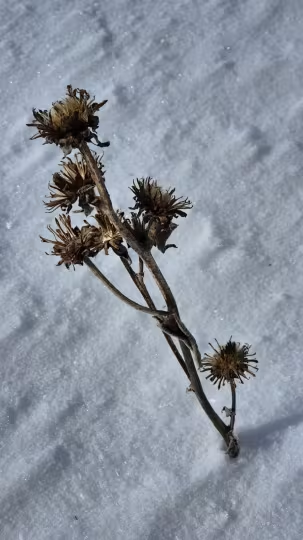
Elecampane (Inula helenium) is a perennial plant of the Asteraceae family, valued for its medicinal properties and historical importance in herbology.
The seeds should be sown in autumn or early spring. If planting in spring, it is crucial to sow as early as the soil temperature allows for germination.
Seeds need to be covered lightly with 1–2 cm of soil. Germination is often slow and can take up to three weeks depending on soil temperature and moisture.
For commercial production, planting in rows with 60–70 cm spacing is recommended to ensure proper development of the root system and mechanical access.
Starting seeds in trays indoors for transplanting is an alternative method that often leads to more uniform growth and better survival rates in the field.
Elecampane thrives in rich, moist, but well-drained loamy soils. It avoids heavy clay soils that are prone to waterlogging and acidity.
A sunny location is vital for the plant. While it can tolerate partial shade, full sun promotes better essential oil accumulation in the rhizomes.
The plant is hardy and adapts well to temperate climates, though it benefits from some protection during its first winter to establish deep roots.
Soil preparation should involve significant amounts of organic matter, such as well-rotted compost, to provide nutrients for long-term growth.
Regular weeding is essential, especially in the first growing season when the plant is establishing its rosette of leaves and growing quite slowly.
A well-managed Elecampane plantation can yield approximately 1.5 to 2 metric tons of dried root material per hectare under optimal conditions.
The highest concentration of inulin and essential oils is typically reached by the end of the second or third growing season, making it the ideal harvest time.
Productivity is largely dependent on soil fertility and irrigation management during the peak growth months of summer.
Post-harvest, roots must be washed thoroughly to remove soil debris. Care must be taken to minimize damage during the mechanical lifting process.
Standardized drying techniques are used to ensure the final product retains its active chemical components, preventing oxidative degradation.
Wireworms and cutworms are the primary soil pests that can cause significant damage to the roots, potentially leading to plant failure.
Powdery mildew can infect leaves during humid, stagnant weather conditions, reducing the overall vigor of the plant during the growing season.
Root rot is a common issue if the soil remains waterlogged. Proper site selection and drainage management are the most effective preventions.
Crop rotation should be strictly followed, ensuring that the plant is not replanted on the same plot for at least four to five years.
Effective pest management involves regular monitoring and the prompt removal of any weeds that may act as hosts for common garden insects.
The harvest of Elecampane rhizomes is traditionally performed in the autumn of the second or third year when the stalks turn brown and dry.
Roots are extracted by ploughing or using specialized root diggers, then cleaned of any remaining soil, stems, and smaller lateral rootlets.
Once cleaned, the roots are sliced longitudinally or into chunks to facilitate even and faster drying in climate-controlled units.
The drying process should occur at temperatures not exceeding 40°C to preserve the volatile oils and active ingredients in the plant.
Dried roots should be stored in cool, dry conditions away from direct sunlight to ensure a shelf life of up to three years without quality loss.