
Hairy scorzonera
Scorzonera hirsuta
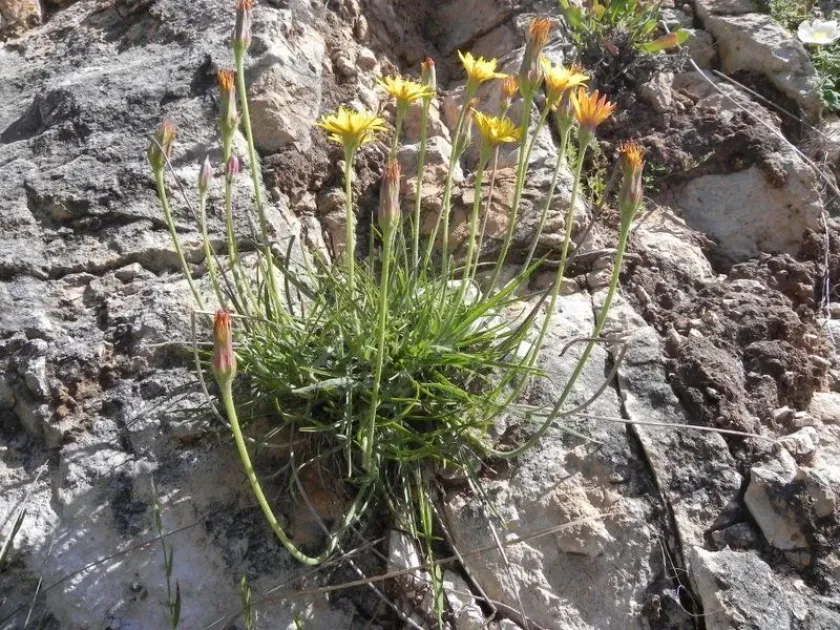
Description
Sowing dates
Hairy scorzonera (Scorzonera hirsuta) is a perennial herbaceous plant belonging to the Asteraceae family. Known for its edible roots, it is increasingly recognized as a specialty root crop in sustainable farming systems.
Sowing should be performed in early spring as soon as the soil is workable and reaches a temperature of 5-8 degrees Celsius. Direct sowing in prepared beds is the standard method for establishing the crop.
Rows should be spaced 30 to 45 centimeters apart to allow sufficient air circulation and room for root development. Achieving an even seed distribution is vital for minimizing the need for thinning later in the season.
The optimal planting depth is 2-3 centimeters. A firm seedbed is essential to ensure that seeds maintain consistent contact with soil moisture, promoting uniform germination across the field.
For regions with milder winters, late autumn sowing is an alternative. This strategy helps the seeds to break dormancy naturally, leading to earlier spring emergence once the soil warms up.
Growing requirements
This crop thrives in deep, loose, and well-drained soils. Sandy loam or light silt soils are ideal as they allow the taproot to grow straight and reach its full potential without obstructions.
Consistent moisture is key during the root expansion phase. While the plant can tolerate short dry spells once established, drought stress during the rapid growth period often results in woody or misshapen roots.
Hairy scorzonera is relatively hardy and adapted to temperate climates. It prefers sunny locations but can tolerate partial shade, provided that the soil conditions remain optimal for nutrient uptake.
Soil fertility management should focus on a balanced nutrient profile. Excessive nitrogen should be avoided to prevent luxurious leaf growth at the expense of root energy storage; phosphorus and potassium are preferred.
Routine weeding and soil aeration are critical for high-quality production. Hoeing between rows helps prevent soil crusting, which is a major factor in improving the overall aesthetic quality of the harvest.
Yield
Yield potential is heavily dependent on soil depth and irrigation management. Under intensive management, a well-tended plot can produce significant biomass of high-quality roots.
Strategic thinning is one of the most effective ways to boost yields. By maintaining a spacing of 10-15 centimeters between plants, growers can ensure that every individual plant has the space required for maximum root mass.
The growing season typically spans 100 to 120 days. Monitoring the leaf development is a reliable proxy for root health, as a robust foliage canopy provides the photosynthesis needed for root development.
Harvesting at the peak of maturity, just before the first heavy frosts, maximizes the weight of the yield. Late-season development often results in significantly larger roots due to cooler night temperatures.
Proper record-keeping of planting dates and density helps in refining future yields. Evaluating the root-to-shoot ratio during the season can assist in optimizing nutrition and water distribution.
Main diseases and pests
The primary threats include soil-borne fungal diseases such as white rot and powdery mildew. These are often exacerbated by poor drainage and overcrowded plantings that limit airflow around the base of the plant.
Root pests, including wireworms and white grubs, can cause significant damage by tunneling into the roots. These injuries not only reduce market value but also act as entry points for bacterial soft rot.
Aphid infestations on foliage can stress the plants and potentially transmit viral diseases. Integrated pest management, focusing on early detection, is the best strategy for control.
Rotation is the most effective preventative measure. Planting hairy scorzonera in the same spot more frequently than every 3-4 years significantly increases the risk of pathogen accumulation in the soil.
Maintaining a clean field environment by removing crop debris immediately after harvest helps reduce the carry-over of pathogens into the next growing season.
Harvesting
Harvesting should occur in late autumn when the leaves begin to yellow and wither. This indicates that the plant has redirected energy reserves into the taproot, ensuring the best flavor and storage quality.
Using a digging fork or a specialized mechanical lifter is essential to minimize root breakage. Because the skin of the root is sensitive, careful handling is required to prevent wounds that shorten shelf life.
After extraction, the foliage is typically trimmed close to the crown. It is important to avoid damaging the crown area, as this helps prevent the roots from drying out during storage.
Roots should be cleaned of loose soil but not necessarily washed until ready for use. Keeping the skin dry during the curing process significantly enhances their resistance to storage diseases.
For long-term storage, the roots should be kept in a cool, humid environment. Storing them in containers filled with moist sand or peat at 0-2 degrees Celsius maintains freshness for several months.