
Blainvillea dichotoma
Blainvillea dichotoma
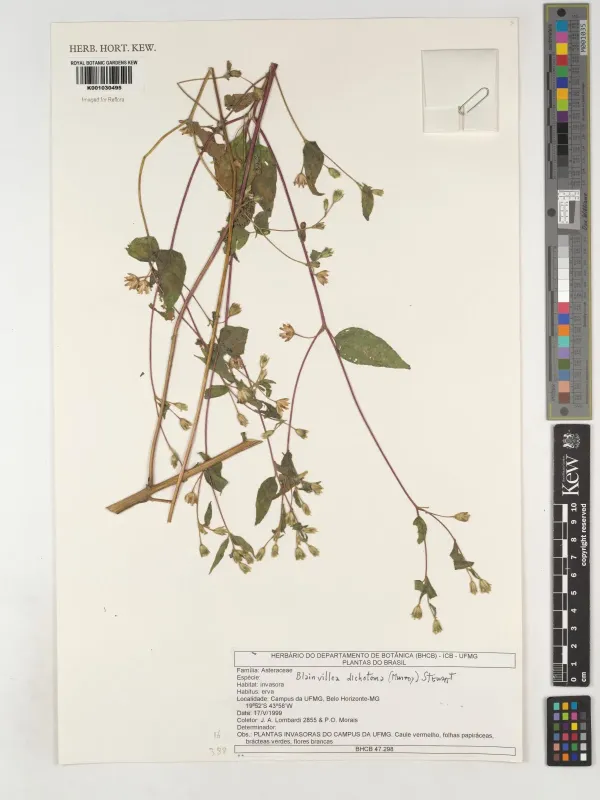
Description
Growing requirements
Blainvillea dichotoma is an annual herbaceous plant belonging to the Asteraceae family. It is widely distributed across tropical and subtropical regions of Asia, Africa, and Australia. In many of these areas, it is recognized for its robust growth habit and ability to adapt to varying ecological niches.
The plant thrives in warm climates, requiring consistent temperatures for optimal photosynthesis and development. It is typically found in open fields, along roadsides, and in disturbed soils, where it can quickly establish itself. Soil fertility plays a significant role in the biomass production of this species.
Regarding cultivation requirements, the plant prefers well-drained loamy soils with adequate moisture content. While it is relatively resilient, it performs best under full sun exposure. It is sensitive to extreme cold, meaning its cultivation cycle is strictly dictated by the seasonal thermal patterns of its native habitat.
Botanically, the species is defined by its characteristic dichotomous branching pattern, where the stem divides into two equal parts. The foliage is generally pubescent, which aids in moisture retention and protection against herbivores. The inflorescences are small flower heads typical of the daisy family.
The primary economic use of Blainvillea dichotoma is its role as a forage source for livestock in specific tropical farming systems. Due to its rapid biomass accumulation, it serves as an opportunistic crop that farmers may harvest in regions where specialized fodder crops struggle to grow during peak seasons.
Main diseases and pests
The crop is prone to various pests including aphids and spider mites which can affect plant vigor. Furthermore, moisture-related issues such as leaf blight and root rot can occur if the field is poorly drained. Integrated pest management strategies are recommended to maintain healthy crop density.