
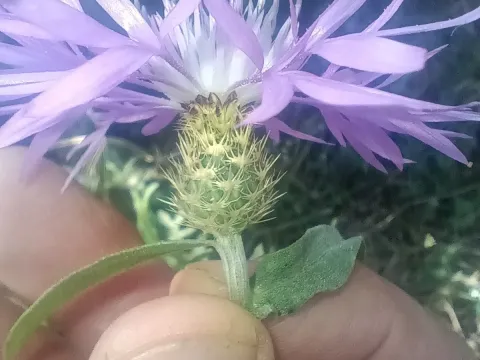
Centaurea napifolia
Centaurea napifolia
Centaurea napifolia is an annual herbaceous plant belonging to the Asteraceae family. In agricultural settings, seeding is typically carried out in early spring once soil temperatures reach a range of 8–10 degrees Celsius, which is ideal for germination.
What the section contains
Centaurea napifolia
To ensure uniform emergence, seeds are sown at a shallow depth of 1–2 centimeters. Proper soil preparation before sowing is essential to provide a fine, friable seedbed that facilitates optimal contact between the soil and the seed.
Seeding rates are carefully calculated based on the intended use of the crop, whether for biomass production or seed harvesting. Consistent spacing between rows is maintained to facilitate future mechanical weeding and crop maintenance operations.
Post-sowing soil compaction is recommended to enhance moisture retention and promote stable germination. During the initial growth phase, effective weed control is crucial to ensure that the young plants have adequate resources to develop.
Modern precision planters allow for accurate seed placement, which contributes to higher crop uniformity. Early spring sowing leverages seasonal soil moisture, providing a competitive advantage to the crop over potential weed infestations.
This crop thrives in well-lit environments and is considered highly photophilous. Adequate sunlight exposure is necessary to maximize vegetative growth and ensure healthy development of the inflorescences.
Regarding soil conditions, Centaurea napifolia prefers light, well-drained soils, such as sandy loams, with a neutral to slightly alkaline pH. Proper drainage is imperative, as waterlogging is detrimental to its root system.
The plant exhibits moderate drought tolerance, making it suitable for regions with variable rainfall. Nevertheless, timely irrigation during critical physiological stages, such as the budding phase, is beneficial for yield.
Balanced mineral nutrition is key to achieving high productivity. Initial nitrogen applications boost green mass, while later applications of phosphorus and potassium support structural integrity and high-quality seed production.
The optimal temperature range for development is between 18 and 25 degrees Celsius. The crop is resilient enough to handle mild temperature fluctuations, though extreme cold or prolonged frost can negatively impact growth.
Centaurea napifolia may be susceptible to fungal diseases such as powdery mildew or rust, especially under high humidity conditions. Implementing crop rotation is a primary strategy to break the cycle of soil-borne pathogens.
Common pests include aphids and various weevils that damage leaves and flower heads. Integrated pest management practices, including biological controls and targeted interventions, are recommended for large-scale operations.
Maintaining field sanitation by removing weeds that act as alternative hosts is vital. A clean field environment significantly reduces the risk of disease spread and minimizes potential damage from insect populations.
Root rot issues are typically associated with poor drainage or overwatering. Maintaining a correct irrigation schedule is essential to preserve the health of the root zone and prevent the onset of fungal infections.
Regular monitoring starting from the seedling stage allows for the early detection of issues. Quick response to pest and disease threats helps maintain the overall health of the field without excessive use of chemicals.
Harvesting strategies depend on the primary objective, whether for green mass collection or seed yield. For green biomass, harvesting is performed at the peak of the flowering phase when nutrient levels are highest.
If the goal is to produce seeds, harvesting is conducted after the flower heads have dried and turned brown, indicating full physiological maturity. Precise timing is necessary to prevent pre-harvest seed loss.
Mechanical harvesting via combine harvesters is standard for large fields. Proper adjustment of the threshing settings is required to handle the small seeds effectively and minimize losses during the collection process.
Post-harvest handling involves cleaning and drying the seeds to reach an ideal moisture content for storage. High moisture during storage can lead to molding and the rapid loss of seed viability.
Stored products must be kept in cool, dry, and well-ventilated facilities to maintain quality. Proper storage protocols ensure that the harvest remains in optimal condition for industrial processing or future sowing.