
Bigelowia viscidiflora
Bigelowia viscidiflora
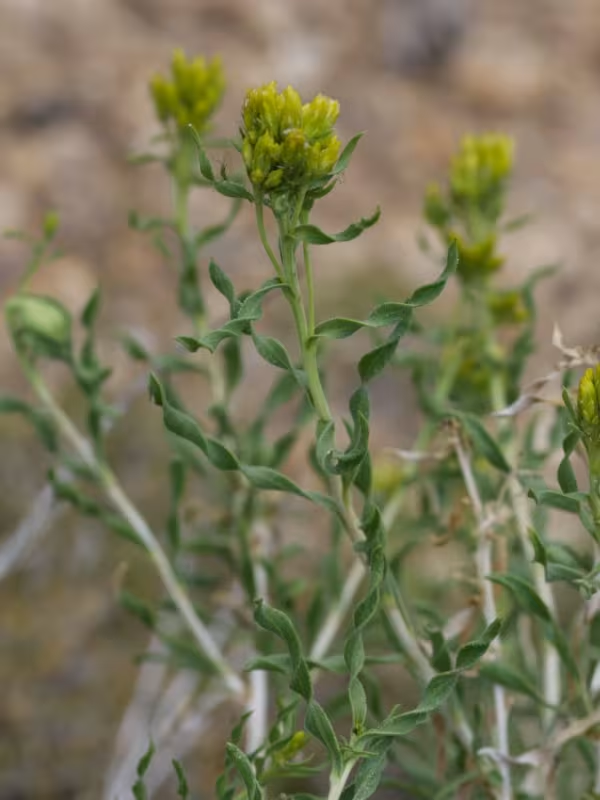
Description
Sowing dates
Bigelowia viscidiflora, commonly known as a type of rabbitbrush, is a perennial subshrub belonging to the Asteraceae family. It is increasingly recognized in agronomy for its resilience in arid environments and its value as a late-season floral resource.
Originating from the western regions of North America, this species is highly adapted to extreme temperature fluctuations and poor soil quality. Seeds require natural stratification or cold treatment to break dormancy effectively before spring germination occurs.
When sowing, it is critical to provide well-drained, sandy, or rocky soil textures. Seeds should be sown at a depth of approximately 0.5 to 1 centimeter, ensuring they remain protected from surface drying while receiving sufficient light to trigger the developmental process.
Field establishment is best achieved in early spring. The plant exhibits a slow growth habit during its initial seedling phase, necessitating careful weed control to ensure the young plants are not overwhelmed by more competitive invasive grasses.
Spacing between plants should be sufficient to allow for mature growth, typically around 0.5 to 1 meter apart, depending on the specific soil moisture availability. This spacing supports individual plant health and reduces the competition for limited soil nutrients.
Growing requirements
The primary ecological requirement for Bigelowia viscidiflora is full solar exposure. The species thrives in open areas where sunlight intensity is high, as shade tolerance is minimal and results in leggy growth and significantly reduced flowering capacity.
The plant is exceptionally drought-tolerant once established, requiring very little supplemental irrigation. It performs best in soils with excellent drainage, such as coarse-textured gravelly or sandy loams, and struggles in heavy, poorly aerated clay soils.
Regarding temperature, it is highly resilient, capable of enduring the intense heat of summer and the freezing conditions of high-altitude winters. This wide physiological amplitude makes it an excellent candidate for restoration projects in harsh, volatile climates.
Soil nutrient requirements are low. The species is adapted to nutrient-poor environments, and excess nitrogen application is detrimental, as it encourages excessive foliage production at the expense of its vital nectar-producing flowers.
Maintenance is minimal, consisting mainly of protecting young stands from encroachment. Once the taproot system is well-developed, the plant becomes largely self-sustaining, provided that the soil is not subjected to long-term waterlogging or soil compaction.
Yield
The agricultural value of Bigelowia viscidiflora is largely concentrated in apiary management. It acts as a critical late-summer and autumn nectar source for honeybees when other floral resources have already completed their life cycle.
Nectar yield is heavily dependent on the plant density and environmental conditions, particularly the moisture levels in late summer. Healthy populations can provide substantial foraging opportunities, which are vital for the late-season buildup of bee colonies.
Beyond its nectar-producing capabilities, the plant is valued for erosion control. Its robust root system helps stabilize soils on slopes and wind-prone areas, preventing soil loss and promoting the structural integrity of degraded land plots.
Biomass production is moderate, and while not a primary forage crop, its foliage may occasionally be browsed by wildlife. The primary economic return for producers is realized through ecosystem services and honey production support.
Harvesting for seed production should be performed when the floral heads exhibit signs of drying but before the pappus begins to disperse seeds via wind. Manual or gentle mechanical harvesting is recommended to preserve seed viability.
Main diseases and pests
The most common disease threats include fungal infections such as powdery mildew, which can become prevalent in dense stands during periods of high humidity or poor airflow. Ensuring adequate spacing is the best preventive strategy.
Insect pests include various defoliators that may feed on the leaves and young stems. While usually not fatal to mature bushes, severe infestations can reduce the overall health of the plant and its nectar production potential.
Root rot is a significant threat if the soil remains waterlogged for extended periods. Proper site selection focusing on well-drained topography is the primary defense against this soil-borne pathogen and ensuring plant longevity.
Sucking insects, such as aphids, can occasionally colonize young growth. Management should prioritize biological controls or selective insecticides that are safe for pollinators to maintain the site's ecological utility for honeybees.
Overall, Bigelowia viscidiflora shows high resistance to most agricultural stressors. By maintaining diverse planting patterns and avoiding heavy chemical interventions, growers can ensure a healthy, productive population for many years.