
Bahiopsis laciniata
Bahiopsis laciniata
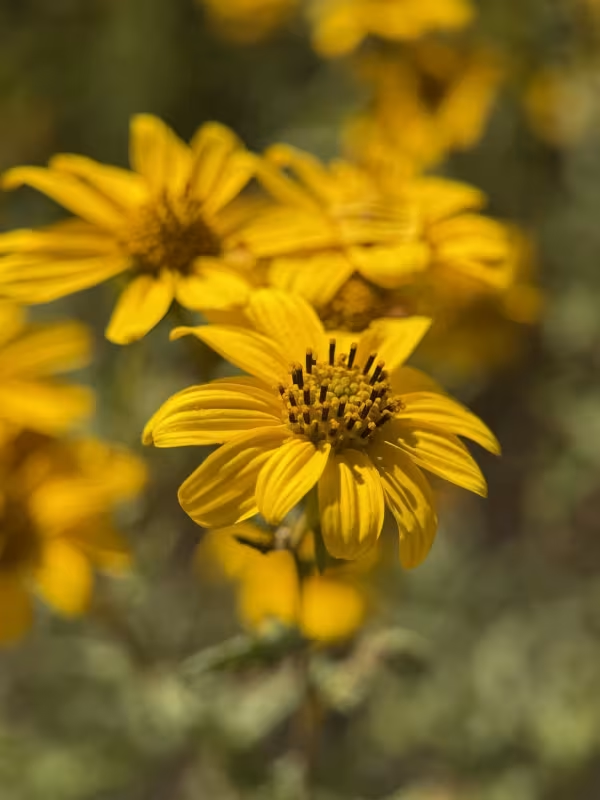
Description
Sowing dates
Bahiopsis laciniata, commonly known as San Diego viguiera, is a hardy perennial shrub within the Asteraceae family. Propagation typically involves seed dispersal during the late summer months, aligning with the plant's natural life cycle.
For agricultural cultivation, seeds require a period of cold-moist stratification to break dormancy. This process mimics the winter conditions of its native habitat, significantly improving germination rates.
The ideal sowing medium consists of a loose, well-draining mineral soil mix. Planting depth should be kept shallow, approximately 5 mm, to ensure that the small seeds receive adequate light upon emergence.
Controlled irrigation is vital during the germination phase, but it should be phased out as the seedlings establish their root systems. Overwatering the seedbed is the most common cause of failure in propagation.
Seedlings should be thinned to allow proper airflow, which prevents the development of fungal damping-off disease common in crowded, damp conditions.
Growing requirements
As a sun-loving species, Bahiopsis laciniata requires full solar exposure to thrive. Its physiological adaptations are optimized for high-intensity light levels found in open, arid environments.
The plant demonstrates remarkable soil versatility, provided the drainage is excellent. It thrives in rocky, gravelly, or sandy loams that prevent moisture from accumulating around the root crown.
Climate requirements include mild, wet winters and hot, dry summers. The plant is highly drought-tolerant, utilizing its pubescent foliage to reflect sunlight and minimize water loss through transpiration.
Fertilizer application should be kept to a minimum. Because this species is adapted to nutrient-poor soils, heavy nitrogen fertilization can lead to succulent growth that is more susceptible to frost and pests.
Maintaining a natural spacing between plants is crucial for air circulation. This helps regulate the humidity level within the shrub, preventing the build-up of pathogenic spores.
Main diseases and pests
Root rot caused by Phytophthora species is a significant threat when soil drainage is insufficient. Keeping the base of the plant dry is the most effective preventative measure.
Insect pests, such as aphids and various larvae, may feed on the tender growth tips. These infestations are generally managed through integrated pest management strategies rather than broad-spectrum insecticides.
Powdery mildew can occur during periods of prolonged high humidity. Improving ventilation through pruning and proper plant density helps mitigate this environmental risk.
Root-knot nematodes can occasionally affect the plant in compromised soils, potentially reducing the plant's ability to uptake water and nutrients during the peak of summer.
Regular sanitation of the area, including the removal of dead or decaying plant material, reduces the habitat available for potential pests and fungal pathogens.