
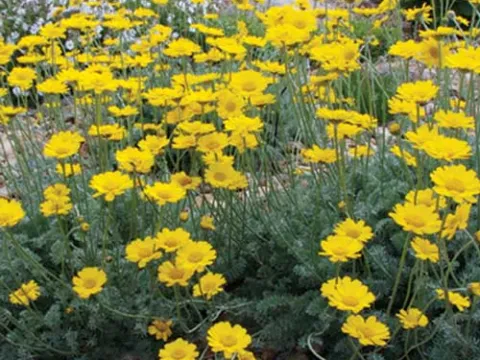
Anthemis marschalliana
Anthemis marschalliana
Anthemis marschalliana is a perennial herbaceous plant belonging to the Asteraceae family. It is native to the mountainous regions of the Caucasus, where it thrives in harsh, high-altitude environmental conditions on rocky and gravelly slopes.
What the section contains
Anthemis marschalliana
As a xerophytic species, it has evolved to survive in habitats with limited water availability and significant fluctuations in temperature. Its root system is highly efficient at extracting nutrients from mineral-rich but organic-matter-poor limestone soils.
For successful cultivation, the plant requires full sun exposure throughout the day. It cannot tolerate shaded locations or stagnant water, as these conditions rapidly promote root rot and lead to the degradation of the plant's overall health and vitality.
Soil requirements focus primarily on drainage. The ideal growing medium is a loose, stony substrate that allows excess water to percolate away from the roots immediately. Heavy clay soils are entirely unsuitable for this species without intensive soil modification.
Maintenance during the growing season is relatively low. Once established, the plant is quite drought-tolerant and requires minimal irrigation. Weeding should be focused on the first year, after which the plant forms a stable community that effectively competes with weeds.
The primary economic use of Anthemis marschalliana is in the pharmaceutical and cosmetic industries. The plant produces various secondary metabolites, including essential oils and flavonoids, which possess significant biological activity and therapeutic potential.
Harvesting is conducted during the peak flowering period when the concentration of essential oils is at its highest. Mechanical or manual cutting of the aerial parts is the standard procedure, ensuring that the roots remain undisturbed for future growth cycles.
Post-harvest processing involves immediate drying in well-ventilated areas away from direct sunlight. Maintaining a low temperature during the drying process is crucial to prevent the evaporation of volatile organic compounds that define the plant's medicinal quality.
Once dried, the biomass should be stored in cool, dry conditions in airtight containers. This ensures that the chemical integrity of the harvested material is preserved for industrial extraction or further medicinal preparations over extended periods.
Beyond commercial use, Anthemis marschalliana is an excellent choice for xeriscaping and rock gardens. Its silver-hued foliage and bright yellow flowers provide aesthetic value while requiring very little water, making it a sustainable choice for landscaping in dry climates.