
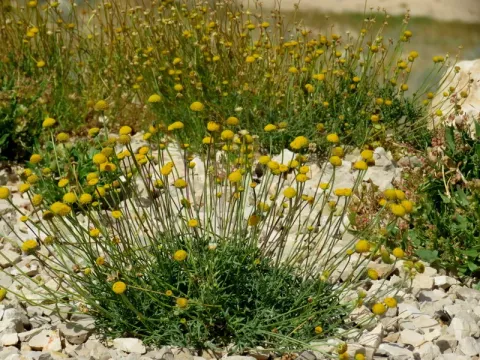
Anthemis pauciloba
Anthemis pauciloba
Anthemis pauciloba, a member of the Asteraceae family, requires specific timing for sowing to ensure successful germination and early establishment.
What the section contains
Anthemis pauciloba
Spring sowing should be performed once soil temperatures stabilize above 10 degrees Celsius, typically occurring from late March to mid-April.
For regions with mild winters, autumn sowing can be performed to allow the seeds to undergo natural vernalization, resulting in more vigorous spring growth.
Since the seeds are relatively small, shallow placement (approximately 0.5 cm deep) is essential to ensure they receive sufficient light for emergence.
Adequate soil moisture is critical immediately after sowing; therefore, irrigation should be applied if rainfall is insufficient during the critical germination phase.
This species thrives in open, sunny environments and is highly adaptable to a variety of soil textures, including rocky and sandy substrates.
Optimal growth occurs in well-drained soils; the plant is particularly sensitive to waterlogging, which can cause root rot and rapid yield loss.
Anthemis pauciloba performs best in neutral to slightly alkaline soil conditions, which support the development of its secondary metabolites.
The plant demonstrates excellent drought tolerance, making it a suitable candidate for cultivation in arid or semi-arid regions with limited rainfall.
Minimal nutrient supplementation is required compared to intensive crops, as the plant is naturally adapted to survive in lower fertility soils.
The yield of Anthemis pauciloba is primarily determined by the density of flower head production, which is influenced by solar intensity and plant spacing.
Proper field management, including weed control and spacing, ensures that each plant receives enough resources to reach its maximum reproductive potential.
Commercial yields are calculated based on the dry weight of harvested flower heads, which are the main organ of interest for the industry.
Yield stability is generally high due to the plant's natural resistance to environmental stress, provided that drainage is managed correctly.
Regular monitoring of plant vigor allows for localized interventions, ensuring that all sections of the field contribute to the total harvest.
The primary threats to this crop involve fungal pathogens that develop during periods of excessive rainfall or poor air circulation in the field.
Powdery mildew represents a significant risk to the foliage, especially when humidity levels remain high for extended periods during the growing season.
In terms of insect pests, aphid infestations can cause damage to developing flower buds, reducing both quantity and quality of the raw material.
Soil-borne larvae may occasionally affect the root system, although the plant is generally robust enough to recover with appropriate management.
Integrated pest management strategies are recommended, focusing on early detection and the use of botanical or biological controls to protect the crop.
Harvesting should be synchronized with the peak flowering stage to maximize the concentration of valuable phytochemicals within the flower heads.
It is advisable to perform harvesting during dry weather conditions to prevent the absorption of excess moisture, which leads to spoilage during drying.
The flower heads should be handled carefully to avoid physical damage; processing should begin as soon as possible after the harvest is complete.
Drying must be conducted in a dark, ventilated space at low temperatures (below 45 degrees Celsius) to preserve essential oil components and color quality.
Proper storage in airtight, moisture-proof containers is necessary to maintain product shelf-life and prevent the degradation of active chemical compounds.