
Trachyandra falcata
Trachyandra falcata
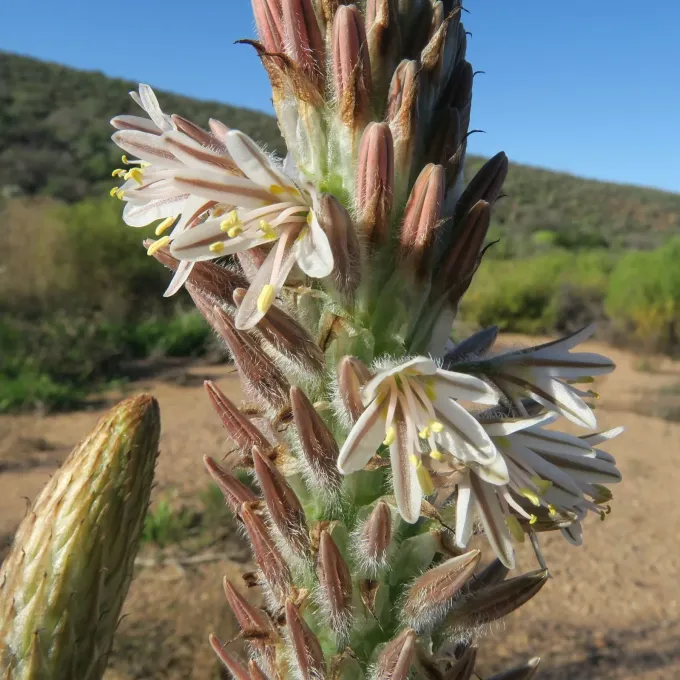
Description
Growing requirements
Trachyandra falcata belongs to the Asphodelaceae family and is a succulent native to the arid regions of Southern Africa. Its biology is perfectly adapted to environments with irregular precipitation and poor soil quality.
The plant features distinctively curved leaves that act as water storage organs, allowing it to survive extreme drought. These botanical structures are highly specialized and characterize the succulent nature of the species.
Agricultural success depends on providing a well-draining substrate, usually composed of sand, gravel, and minimal organic matter. Poor drainage quickly leads to root asphyxiation and plant death.
The climate requirements include a cool, wet growing season followed by a dry, hot dormancy period. High light intensity is crucial throughout the year to maintain the plant's shape and prevent etiolation.
In practice, Trachyandra falcata is grown primarily in specialized nurseries and botanical settings for its aesthetic appeal. It requires minimal fertilizer, as high nutrient levels can cause irregular growth patterns and foliage damage.
Main diseases and pests
Root rot is the most significant threat to the cultivation of Trachyandra falcata, usually caused by overwatering or compacted soil. Once the roots are compromised, the plant is extremely difficult to revive.
Mealybugs are the primary pest concern, as they often hide in the curved folds of the leaves. Their presence can severely weaken the plant and lead to secondary infections from the honeydew they produce.
Spider mites may affect the plants under conditions of low humidity and high heat. These pests cause discoloration and surface damage to the succulent leaves, reducing the ornamental quality of the crop.
To mitigate these threats, producers should implement strict watering schedules and maintain good airflow. Preventive applications of systemic insecticides can help manage pest populations before they become an infestation.
Regular monitoring of leaf health and substrate moisture is vital. Any signs of decay require immediate intervention, including repotting into fresh, dry substrate and removing the damaged tissues.