
Asarum yakusimense
Asarum yakusimense
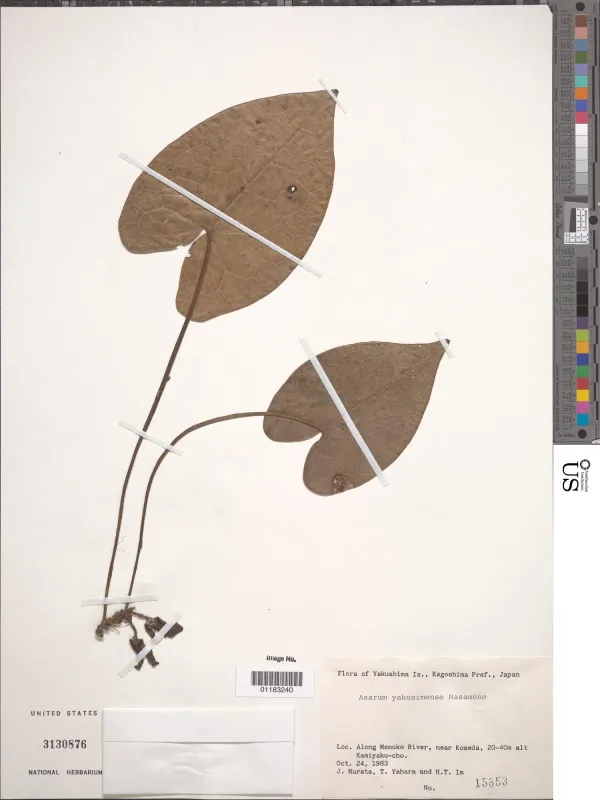
Description
Growing requirements
Asarum yakusimense, a member of the Aristolochiaceae family, is a miniature perennial native to the island of Yakushima, Japan. It is highly valued by collectors for its compact, evergreen foliage and unique aesthetic appeal in shade gardens.
Botanically, this species is characterized by its small, kidney-shaped leaves and low-growing habit. It acts as an excellent groundcover, spreading slowly and forming dense mats that suppress weed growth when provided with adequate space and moisture.
Regarding soil requirements, the plant thrives in rich, humus-laden, and moist substrates. A pH range that is slightly acidic to neutral is ideal. Consistent moisture is vital, as the species does not tolerate drought or drying out of the root zone.
The plant requires deep shade or partial shade to perform optimally. In environments where the air is dry, maintaining humidity through regular watering or placing the plant near water features or in dense plantings is recommended to mimic its natural forest habitat.
Cultural practices include generous mulching with decomposed leaf litter to maintain cool soil temperatures and provide slow-release nutrients. This practice also helps preserve soil moisture during warmer months of the growing season.
Main diseases and pests
Slugs and snails are the primary pests that affect Asarum yakusimense. They are particularly active in damp, shady garden corners and can quickly cause significant aesthetic damage to the leaves.
Root rot, often caused by poor drainage or excessive soil water, remains a major health concern. Ensuring a well-drained planting medium is the most effective preventative measure against fungal pathogens.
Cultural sanitation is essential; removing decaying foliage and garden debris around the base of the plant limits the environment suitable for both pests and fungal development.
In cases of severe infestation, targeted application of molluscicides or the use of physical barriers such as copper tape around pots or garden beds is effective for management.
Monitoring for signs of leaf spot or discoloration early in the season can allow for prompt intervention, ensuring the longevity and health of the perennial planting.