
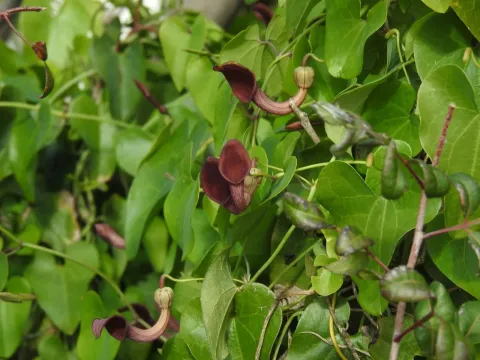
Birthwort
Aristolochia L.
Sowing Aristolochia seeds directly into the ground is typically done in the autumn, as seeds require natural stratification to germinate successfully.
What the section contains

Birthwort
If sowing in the spring, seeds must be artificially stratified in a refrigerator at temperatures between +2 and +5 degrees for at least 2-3 months.
The optimal time for transplanting seedlings is early spring, once the risk of severe frost has passed and the soil has sufficiently warmed up.
Propagation can also be successfully achieved through stem cuttings taken in mid-summer, provided that high humidity levels are maintained.
When choosing a site for planting, select areas protected from strong winds to prevent mechanical damage to the plant's large, ornamental leaves.
The genus Aristolochia belongs to the Aristolochiaceae family and consists of perennial woody vines known for their unique floral structure.
These plants thrive in fertile, well-drained loamy soils that possess a neutral or slightly acidic pH level and consistent moisture levels.
Aristolochia species are generally shade-tolerant, making them excellent choices for vertical gardening on north-facing walls or fences.
Providing sturdy, durable support structures is a critical aspect of their cultivation, as the vines become heavy and vigorous as they mature.
Regular irrigation is essential during dry spells, as the large leaf surface area leads to high rates of transpiration and water demand.
Aristolochia is generally considered a robust plant with high resistance to many common garden pests and fungal pathogens.
In conditions of poor soil drainage or excessive stagnant moisture, the plants may become susceptible to root rot or other soil-borne diseases.
While rare, infestations of aphids or spider mites can occasionally occur, particularly during hot and dry weather conditions.
Cultural control measures, such as ensuring proper spacing between plants and adequate air circulation, are the best methods for prevention.
Always exercise caution when handling the plant, as some species contain compounds that can be toxic if ingested or cause skin irritation.